

The Importance of Professional Safety Device Implementation
Home safety goes beyond locking doors; it involves ensuring the systems designed to protect you are functioning correctly and positioned strategically. In coastal areas like Flagler Beach, environmental factors such as high humidity and salt air can degrade electronic sensors faster than in inland regions, making regular professional assessment vital. Many homeowners assume that purchasing a battery-operated unit from a hardware store is sufficient, but true safety requires a more integrated approach.
Accu-Temp Heating and Air Conditioning provides comprehensive installation services that ensure your detection systems are hardwired, interconnected, and compliant with the rigorous standards of the Florida Building Code. When a fire occurs, seconds matter. A properly installed system does not just make noise; it communicates across the entire home, ensuring that an alarm triggered in the kitchen alerts family members sleeping in upstairs bedrooms immediately. Relying on outdated or standalone units leaves gaps in protection that can have devastating consequences.
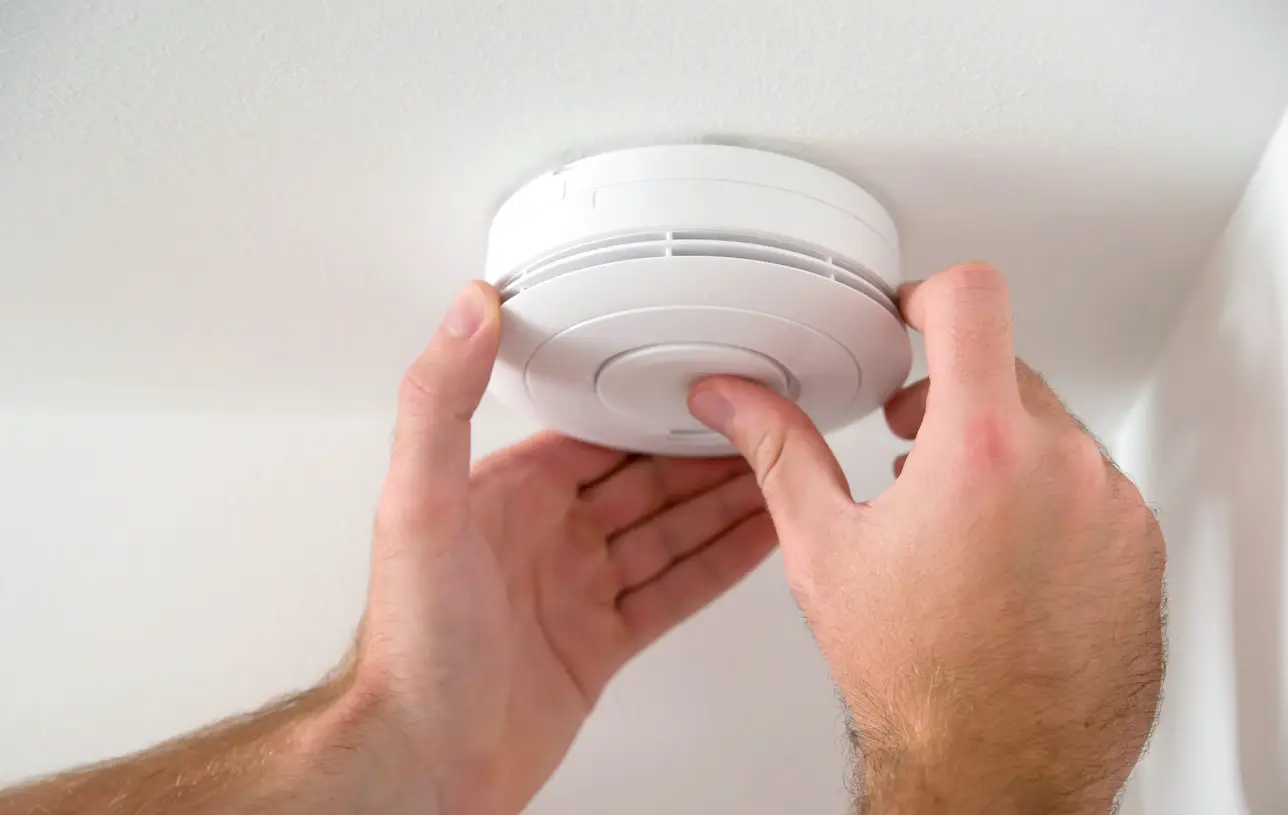
What Professional Installation Includes
Choosing a professional service for your smoke detector needs changes the scope from a simple DIY task to a complete safety upgrade. The goal is to establish a network of protection that covers every square foot of the living space without triggering false alarms due to poor placement near kitchens or bathrooms.
When technicians arrive for an installation, the service encompasses several critical components:
- Site Evaluation and Code Compliance: A thorough review of the floor plan identifies required locations for detectors. Current codes generally mandate devices inside every sleeping room, outside each separate sleeping area, and on every level of the home, including basements.
- Hardwiring with Battery Backup: Technicians run the necessary electrical wiring to ensure the units draw power from the home’s main electrical system. This provides a constant power source, while a battery backup ensures functionality during power outages caused by summer storms or hurricanes.
- Interconnectivity Setup: Modern safety standards require that when one alarm sounds, they all sound. This synchronization is achieved through a dedicated traveler wire or wireless interconnection, ensuring that a fire starting in the garage alerts residents in the master bedroom instantly.
- Sensor Selection: Professionals select the appropriate sensor technology—ionization, photoelectric, or dual-sensor—based on the location. For example, photoelectric sensors are more effective near kitchens to reduce nuisance alarms from cooking, while ionization sensors are better for fast-flaming fires.
- HVAC Integration Analysis: Because air movement affects smoke detection, technicians analyze airflow from registers and returns. Detectors placed too close to supply vents may fail to sense smoke due to air turbulence, a detail often overlooked in amateur installations.
The Installation and Integration Process
Understanding how the installation process works helps homeowners prepare for the upgrade. The process is designed to be efficient, minimizing disruption to the household while maximizing safety coverage. The timeline typically depends on whether the home requires new wiring or if it is a replacement of an existing hardwired system:
- Initial Safety Assessment: The process begins with a walkthrough to identify “dead air” spaces where smoke might not circulate and to verify current wiring infrastructure.
- Circuit Preparation: Power is turned off at the breaker panel to ensure safety. For new installations, electricians fish wires through walls and ceilings to create a dedicated circuit or tap into an existing lighting circuit as permitted by code.
- Mounting and Wiring: Mounting brackets are secured to the ceiling or wall. The specific placement is measured precisely—usually 4 to 12 inches from the ceiling if wall-mounted, or away from corners where air pockets form. The units are then connected to the 120-volt AC line and the interconnect wire.
- System Verification: Once power is restored, the system undergoes rigorous testing. This involves not just pressing the “test” button, which only checks the battery and siren, but often using canned smoke to verify the sensor’s ability to detect particles.
- Interconnection Test: The technician triggers one unit to confirm that every other unit in the residence sounds the alarm simultaneously. This step confirms the integrity of the communication loop.
When to Replace vs. Repair Existing Units
Smoke detectors do not last forever. The sensors inside the devices degrade over time, losing sensitivity to smoke particles. Furthermore, environmental wear and tear in humid climates can accelerate this degradation. Determining whether to repair a connection or replace the entire unit is a critical decision for maintaining safety.
Replacement is the only viable option in the following scenarios:
- The Ten-Year Rule: If the manufacture date on the back of the device is more than 10 years old, the unit must be replaced. This is an industry-wide standard; after a decade, the probability of sensor failure increases dramatically.
- Yellowing Discoloration: If the plastic casing has turned yellow, it indicates significant age and exposure to UV light or heat, suggesting the internal components are brittle and unreliable.
- Frequent Nuisance Alarms: If a unit frequently sounds the alarm when there is no smoke (and it is not due to cooking), the sensor may be contaminated with dust or insects, or it may have failed. While cleaning can sometimes help, persistent issues require replacement.
- Chirping Despite Battery Changes: A unit that continues to chirp after a fresh battery is installed usually indicates a fatal internal fault or end-of-life signal.
- Paint Contamination: If a previous painter painted over the unit, the air intake vents are likely clogged. Painted detectors cannot be cleaned and must be replaced immediately to restore airflow to the sensor.
Navigating Local Codes and Environmental Factors
Flagler Beach presents specific challenges for smoke detector longevity and placement. The coastal environment introduces salt spray and high humidity, which can corrode electrical contacts and interfere with the sensitivity of ionization sensors. Professional installation takes these local variables into account:
- Humidity Management: High humidity can trigger false alarms in ionization detectors. Technicians may recommend photoelectric units or dual-sensor models that are more stable in humid conditions for homes near the water.
- Corrosion Prevention: For homes directly on the coast, checking the integrity of the wiring connections is essential. Technicians ensure wire nuts are tight and connections are protected to prevent intermittent power loss due to oxidation.
- Florida Building Code Requirements: Florida has strict requirements regarding smoke alarm power sources. For any renovation or addition requiring a permit, the code often triggers a requirement to upgrade the entire home’s smoke detection system to hardwired, interconnected units.
- Seasonal Considerations: Hurricane season brings power fluctuations. Hardwired systems with sealed, long-life battery backups are essential for maintaining safety during extended power outages common in the region between June and November.
The Critical Role of Interconnectivity
One of the most significant upgrades a professional service provides is interconnectivity. In older homes, smoke detectors were often battery-operated standalone units. If a fire started in a closed basement, the alarm downstairs might not be loud enough to wake someone sleeping on the second floor with the door closed.
Interconnected systems solve this problem. When one unit detects smoke, it sends a signal—either through a physical wire or a wireless radio frequency—to every other unit in the house. This results in a simultaneous, whole-home alert. This feature is particularly crucial for larger homes or multi-story residences where sound travel is obstructed. Retrofitting older homes with wireless interconnect technology allows for this level of safety without the need to tear down dry wall to run new wires, a solution that professional installers can implement seamlessly.
Sensor Technology: Ionization vs. Photoelectric
Understanding the type of fire you are trying to detect dictates the equipment used. Not all smoke detectors work the same way:
- Ionization Alarms: These are generally more responsive to flaming fires, such as a grease fire in a kitchen or burning paper. They contain a small amount of radioactive material that ionizes the air between two plates. Smoke disrupting this current triggers the alarm.
- Photoelectric Alarms: These are generally more responsive to smoldering fires, like a cigarette falling on a couch or an electrical wire overheating inside a wall. They use a light beam and a sensor; when smoke particles scatter the light, it hits the sensor and triggers the alarm.
- Dual-Sensor Alarms: Accu-Temp Heating and Air Conditioning often recommends dual-sensor alarms which combine both technologies. This provides the broadest coverage, ensuring early detection regardless of whether the fire is fast-flaming or slow-smoldering.
Placement Strategy and Airflow Dynamics
The placement of a smoke detector is not random. It involves physics and an understanding of how smoke travels. Smoke is lighter than air and rises, but it also stratifies:
- Ceiling Placement: Smoke rises to the ceiling and spreads horizontally. Detectors should be mounted in the center of the ceiling when possible.
- Wall Placement: If ceiling mounting is not possible, wall-mounted units must be placed within 12 inches of the ceiling, but not within the top 4 inches. The corner where the wall meets the ceiling creates a “dead air” pocket where smoke may not penetrate immediately.
- HVAC Considerations: Detectors must be kept away from supply vents (which blow air) and ceiling fans. Moving air can push smoke away from the sensor, delaying the alarm. Conversely, placing them near return vents (which pull air) can be effective as smoke is drawn toward the unit, provided it does not become clogged with dust excessively.
- Cathedral Ceilings: In homes with peaked ceilings, smoke detectors must be placed within 3 feet of the peak but not precisely at the apex, to avoid dead air pockets.
Maintenance and Long-Term Reliability
Once installed, a smoke detection system requires ongoing attention to remain effective. While hardwired systems are low maintenance compared to battery-only units, they are not “set it and forget it.”
- Regular Testing: Homeowners should test the system monthly using the test button.
- Cleaning: Dust and cobwebs can block sensors or cause false alarms. Vacuuming the exterior of the unit with a soft brush attachment is recommended every six months.
- Backup Battery Replacement: Even hardwired units use batteries for backup. If the unit uses a 9-volt battery, it should be replaced annually. Many newer models use sealed 10-year lithium batteries that do not require replacement until the entire unit expires.
- System Audits: It is advisable to have a professional check the system every few years, especially after any electrical work or renovations in the home, to ensure the interconnectivity remains intact.
Why Professional Service Beats DIY
While it is possible to buy a smoke detector and stick it to the wall, professional installation offers a layer of assurance that DIY methods cannot match. The integration into the home’s electrical system ensures constant power. The knowledge of local fire codes ensures that the home will pass inspections if it is ever sold or renovated. Furthermore, the strategic placement based on airflow and room usage minimizes the annoyance of false alarms, which is the leading cause of homeowners disabling their devices.
Disabling a smoke detector because it goes off every time you cook is a significant safety risk. Professionals know exactly where to place units to differentiate between burnt toast and a genuine emergency. By utilizing proper hardware and adhering to the National Fire Protection Association (NFPA) 72 standards, professional installation creates a robust safety net.