


Why Almost Every Florida Homeowner Should Think About Water Quality
Do I need a water softener in Florida? For most homeowners, the short answer is yes — and here's why:
Quick Answer: Do You Need a Water Softener in Florida?
| Your Situation | Recommendation |
|---|---|
| City water anywhere in Florida | Very likely yes — municipal treatment does not remove hardness |
| Well water in Florida | Almost certainly yes — often harder than municipal supply |
| Seeing spots on dishes or scale on faucets | Yes — these are classic hard water signs |
| Dry skin, dull hair, soap that won't lather | Yes — soft water makes a noticeable difference |
| Concerned about appliance lifespan | Yes — hard water shortens it significantly |
| North Florida (Tallahassee, Gainesville area) | Probably — even the "softest" Florida water runs 120-140 ppm, still classified as hard |
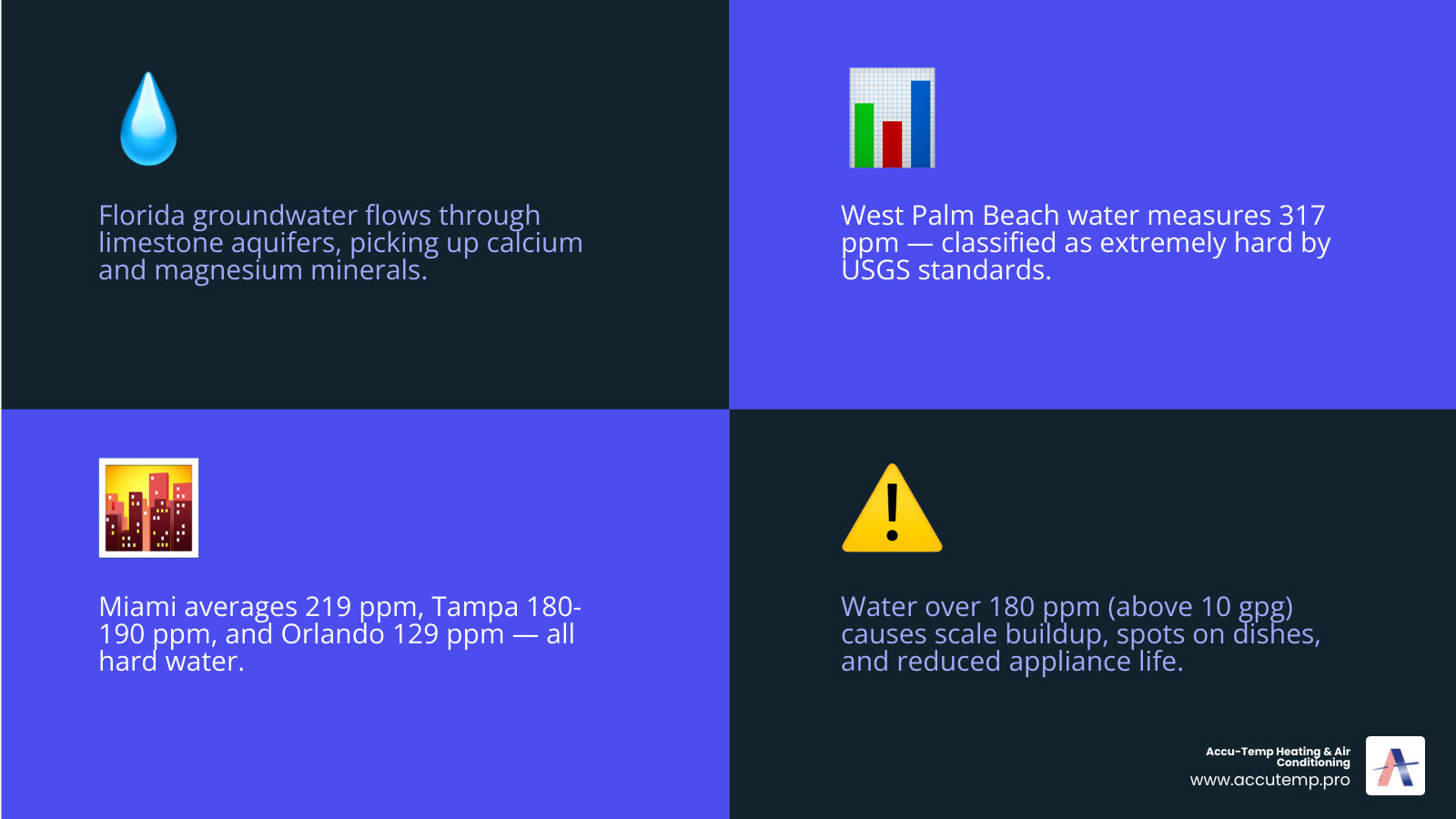
Florida is one of the hardest-water states in the entire country. About 90% of the state's drinking water comes from groundwater — and that groundwater flows through ancient limestone rock, picking up calcium and magnesium minerals along the way. By the time water reaches your tap, it often carries enough dissolved minerals to cause real problems: cloudy glassware, stubborn scale on faucets, stiff laundry, and appliances that wear out faster than they should.
Cities like West Palm Beach measure around 317 ppm of hardness — classified as extremely hard. Miami runs about 219 ppm. Tampa sits in the 180-190 ppm range. Even Orlando, one of the more moderate areas, comes in around 129 ppm. The U.S. Geological Survey classifies anything above 180 mg/L as very hard water, which means a huge portion of Florida falls into that category or beyond.
This isn't just a comfort issue. It's a home protection issue — and understanding your water is the first step to protecting your plumbing, your appliances, and your daily quality of life.
Understanding the Hardness: Do I Need a Water Softener in Florida?
When we talk about "hard water," we aren't talking about how it feels when you do a belly flop into a pool. In plumbing and chemistry, water hardness refers to the concentration of dissolved minerals—specifically calcium and magnesium—within your water supply.
In Florida, these minerals are measured in two primary ways: parts per million (ppm) or grains per gallon (gpg). To put it simply, one grain per gallon is equal to about 17.1 ppm. If your water tests at more than 7 to 10 gpg, you are firmly in the territory where a water softener becomes a necessity rather than a luxury.
The reason we see such high levels of calcium carbonate in our local taps is due to the state's unique geology. Florida sits on a massive bed of limestone. As rainwater seeps into the ground to refill our aquifers, it dissolves the limestone, carrying those minerals directly into the groundwater that eventually flows through your pipes.
Regional Hardness Levels and Why They Matter
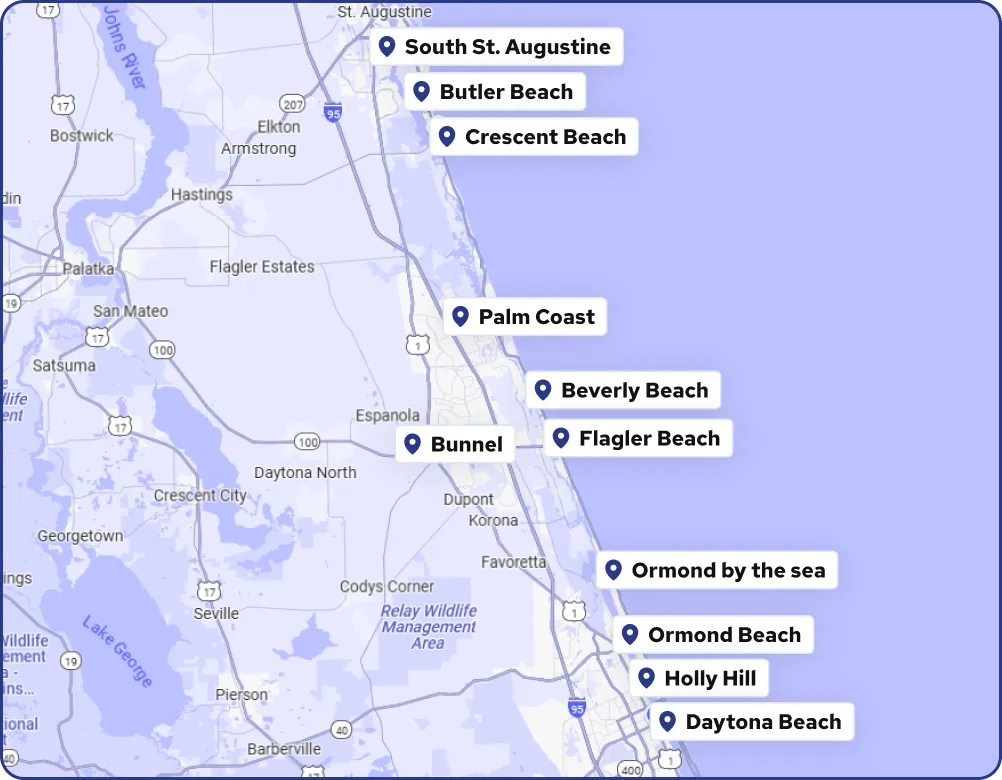
While the entire state deals with mineral-rich water, the severity can change depending on which aquifer your local municipality draws from. Most of our service areas, including Palm Coast, Daytona Beach, and St. Augustine, rely on the Floridan Aquifer or the shallower Biscayne Aquifer.
| Florida City | Hardness Level (ppm) | Classification |
|---|---|---|
| West Palm Beach | 317 ppm | Extremely Hard |
| Jacksonville | 260 ppm | Very Hard |
| Miami | 219 ppm | Very Hard |
| Tampa Bay Area | 180-190 ppm | Very Hard |
| Daytona Beach / Palm Coast | 150-180 ppm | Hard to Very Hard |
| Orlando / Kissimmee | 129 ppm | Hard |
| Tallahassee / Gainesville | 120-140 ppm | Hard |
As you can see, even the "softest" regions in the state are still classified as having hard water. If you want to dive deeper into how these levels affect your home, you can learn more about Water Quality and how it impacts your daily life.
Signs Your Florida Home Needs a Water Softener
If you aren't sure where your home falls on the spectrum, your house is likely already telling you the answer. Hard water leaves a trail of evidence that is hard to ignore once you know what to look for:
- Cloudy Glassware: Do your "clean" glasses come out of the dishwasher looking foggy or covered in white spots? That’s mineral residue.
- Soap Scum: If you find yourself scrubbing a thick, white film off your shower doors every week, you're dealing with the reaction between hard minerals and soap.
- Stiff Laundry: Clothes washed in hard water often feel scratchy, and colors tend to fade faster because the minerals prevent the detergent from rinsing away completely.
- Scale Buildup: Look at your showerhead or the base of your kitchen faucet. If you see a white, crusty, or chalky substance, that is "limescale," and it is likely clogging the inside of your pipes too.
If these signs sound familiar, it might be time to look into Water Softener Installation Palm Coast FL to stop the damage before it gets worse.
How Water Softening Protects Your Home and Health
A water softener is essentially a "mineral vacuum" for your home. Most traditional systems use a process called ion exchange. Inside the softener tank are millions of tiny resin beads that carry a negative charge. Since calcium and magnesium ions carry a positive charge, they stick to the beads like magnets as water passes through the tank.
Eventually, those beads get "full." This is when the system enters its regeneration cycle, flushing the beads with a brine (salt) solution to knock the minerals off and send them down the drain, recharging the beads with sodium ions so they can start the process all over again.
The benefits of this process extend far beyond just cleaner dishes. Soft water is much gentler on your body. Because the water can actually rinse soap away properly, many homeowners find that their skin feels less itchy and their hair retains more natural shine. For those in Flagler County, Water Softener Installation Flagler Beach FL can be a game-changer for personal comfort.
Salt-Based Softeners vs. Salt-Free Conditioners
When researching do i need a water softener in florida, you will likely encounter "salt-free" systems. It is important to understand the difference:
- Salt-Based Softeners: These actually remove the minerals from the water. This is the only way to get that "slick" soft water feel and completely eliminate scale.
- Salt-Free Conditioners: These don't remove the minerals. Instead, they "condition" them (often using a process called Template Assisted Crystallization) so they don't stick to surfaces. While they help prevent scale in pipes, they won't help with soap lathering or that soft skin feel.
For most Florida homes with very high hardness, a traditional salt-based system is usually the most effective choice. If you are concerned about sodium intake, you can use potassium chloride instead of salt, or pair your softener with a Water Filtration System Installation Palm Coast FL for the best of both worlds.
The Long-Term Impact on Appliances and Plumbing
Your plumbing is often the silent victim of hard water. Limescale doesn't just sit on your showerhead; it builds up inside your water heater, dishwasher, and washing machine.
A water heater with just 1/8 inch of scale buildup can lose up to 20% of its energy efficiency. This is because the heating element has to heat through a layer of "rock" before it can even touch the water. Over time, this causes the tank to overheat and fail prematurely. By treating your water, you are essentially giving your appliances a longer lease on life. If you're ready to protect your investment, consider a Water Filtration System Installation Flagler Beach FL.
Choosing and Maintaining the Right System for Your Needs
Choosing a system isn't a "one size fits all" situation. You need to consider your grain capacity—which is essentially how much "hardness" the system can remove before it needs to regenerate. For an average four-person home in Florida, experts often recommend a capacity of around 33,000 grains.
You also need to look at the flow rate to ensure your water pressure doesn't drop when someone is showering while the dishwasher is running. Professional installation ensures you have a bypass valve, which allows you to turn off the softening for things like watering your lawn, saving you money on salt and water. Regular Water Softener Maintenance Palm Coast FL is the best way to keep these systems running for their full 10 to 15-year lifespan.
Why Professional Water Testing is the First Step
Before you buy any equipment, you need to know exactly what is in your water. While municipal reports give a general idea, the quality can change by the time it reaches your specific neighborhood. If you are on well water, testing is even more critical, as you might be dealing with iron (which causes orange stains) or sulfur (the "rotten egg" smell) alongside the hardness.
In many cases, a softener works best when paired with other treatments, such as carbon filters for chlorine taste or reverse osmosis for pure drinking water.
Essential Maintenance for a Long-Lasting Water Softener in Florida
Once your system is installed, maintenance is relatively simple but vital:
- Check Salt Levels: You should check your brine tank every 4-6 weeks.
- Watch for Salt Bridges: Sometimes a hard crust of salt forms over the water in the tank, preventing the brine from reaching the resin. If this happens, you just need to break it up with a broom handle.
- Resin Cleaning: Using a specialized resin cleaner once a year can help remove iron or other contaminants that salt alone can't flush out.
For those who prefer a "set it and forget it" approach, scheduling Water Softener Maintenance Flagler Beach FL ensures your system is always optimized for Florida's tough water conditions.
Frequently Asked Questions About Florida Water
Is hard water in Florida safe to drink?
Yes, Florida’s hard water is generally safe to drink and meets EPA standards. The calcium and magnesium in the water are actually essential minerals for your diet. However, most people find the taste unappealing, and the aesthetic issues (like spots on everything) make it undesirable for household use.
Does a water softener remove chlorine or lead?
No. A standard water softener is designed specifically for mineral removal. If you are concerned about chlorine taste from city water or heavy metals like lead, you should pair your softener with a carbon filtration system or a reverse osmosis unit.
How long do water softeners typically last in Florida?
With proper maintenance and regular salt refills, a high-quality water softener in Florida typically lasts between 10 and 15 years. Factors like the amount of water you use and the initial hardness of your source water will play a role in the system's longevity.
Conclusion
At Accu-Temp Heating & Air Conditioning, we’ve been serving our neighbors in Palm Coast, Daytona Beach, and the surrounding areas since 2006. As a family-owned business, we know exactly how frustrating Florida’s water can be for homeowners. Whether you are tired of scrubbing soap scum or worried about your water heater failing early, we are here to help.
We offer a 100% satisfaction guarantee and can help you find the perfect solution for your home’s unique water chemistry. Don't let hard water win the battle against your plumbing—take control of your home's health today.
Ready to say goodbye to hard water? Improve your home's water quality today with Accu-Temp Heating & Air Conditioning.
Contact Us
Latest articles

Service Areas