



Why Heat Pump Advantages Over Traditional HVAC Matter for Florida Homeowners
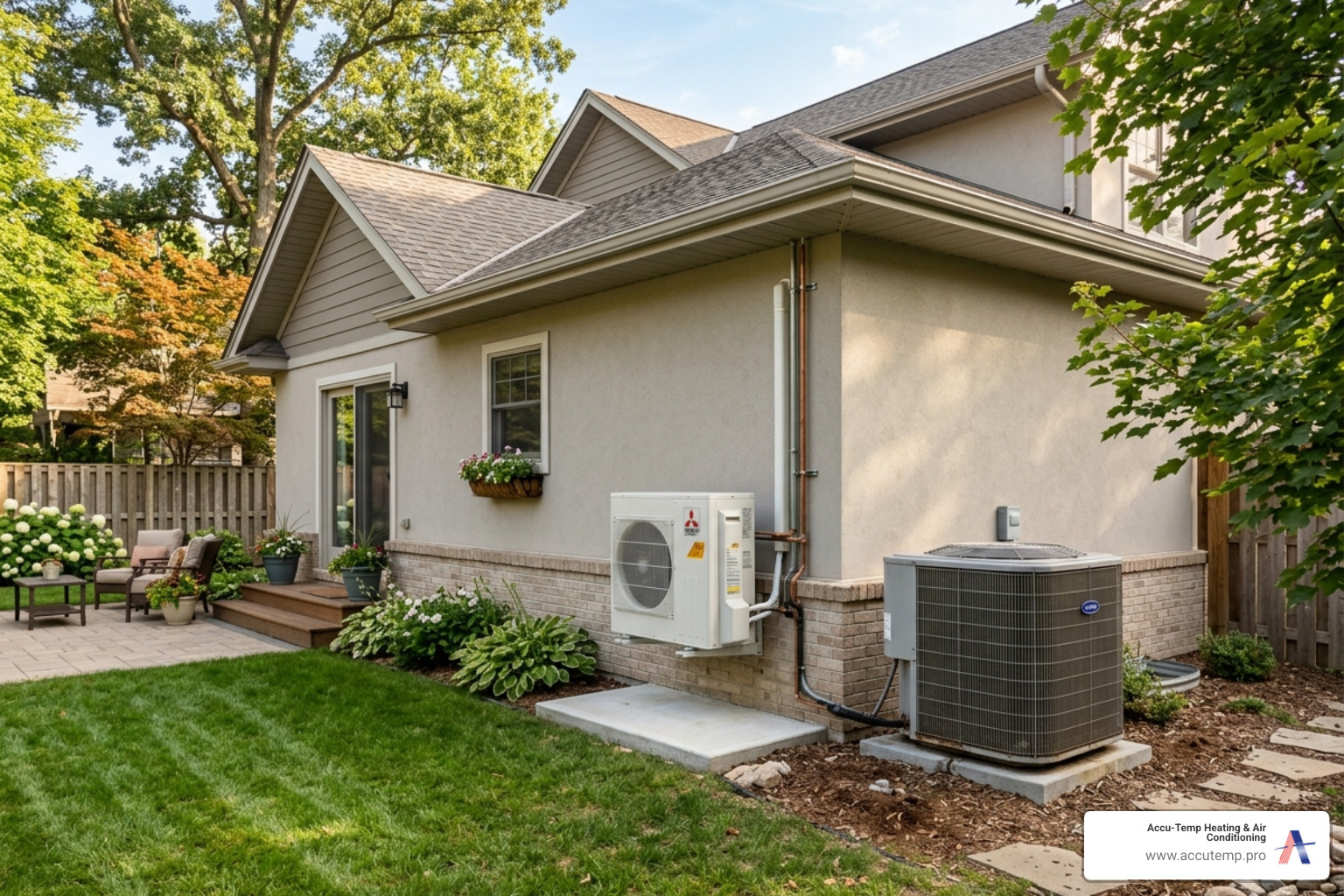
Heat pump advantages over traditional HVAC come down to one fundamental difference: heat pumps move heat instead of creating it. That single distinction unlocks a range of real-world benefits for homeowners — from lower energy bills to better indoor comfort.
Here is a quick look at the key advantages:
- Energy efficiency - Heat pumps deliver 2 to 3 times more heating or cooling energy than the electricity they consume
- Dual functionality - One system handles both heating and cooling year-round
- Lower utility bills - Most U.S. households can save $370 or more per year by switching
- Better air quality - No combustion means no carbon monoxide risk or indoor pollutants
- Longer lifespan - Heat pumps typically last 20 to 25 years, outlasting most traditional AC units
- Environmental benefits - Significantly lower carbon emissions compared to gas furnaces
- Financial incentives - Federal and state rebates can offset upfront installation costs
If you already use a traditional AC and furnace setup, you may be paying more than you need to — both in energy costs and in maintaining two separate systems. For Florida homeowners especially, where cooling season runs most of the year and winters stay mild, a heat pump can be a particularly smart fit.
The sections below break down each advantage in detail, so you can make a confident, informed decision about your home's comfort system.
How Heat Pumps Differ from Traditional HVAC Systems
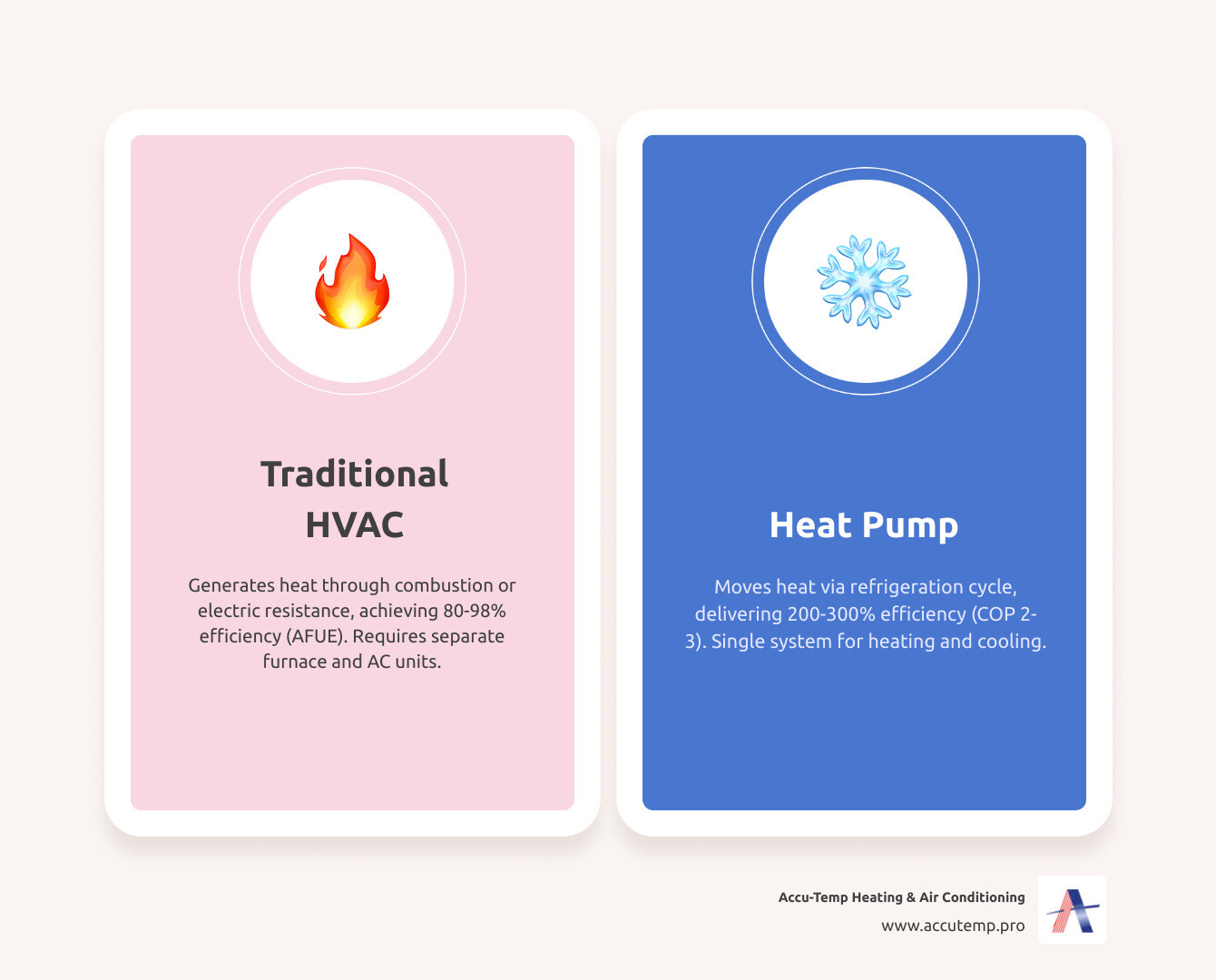
To understand the heat pump advantages over traditional HVAC, we first have to look under the hood. Most people are surprised to learn that a heat pump is essentially an air conditioner that can run in reverse. While a traditional HVAC setup usually consists of two separate units—a central air conditioner for cooling and a furnace for heating—a heat pump is a single, hard-working machine that handles both jobs.
The magic happens through the refrigeration cycle. In the summer, a heat pump works exactly like your refrigerator or a standard AC: it grabs heat from inside your home and dumps it outside. When the weather turns chilly in places like Ormond Beach or St. Augustine, the system uses a reversing valve to flip the script. It begins extracting thermal energy from the outdoor air and pumping it into your living room.
You might wonder, "How can it find heat outside when it's cold?" Even in cool weather, there is still a significant amount of heat energy in the ambient air. Modern heat pumps are incredibly adept at finding that energy and concentrating it to keep you warm. This process is much more elegant than the "brute force" methods used by older systems. To dive deeper into the mechanics, you can read more about Why Use Heat Pumps and How Do They Work.
Heat Generation vs. Heat Movement
The fundamental flaw in traditional heating is that it relies on generation. Whether it is a gas furnace using combustion to burn fuel or an electric furnace using resistance (like a giant toaster), these systems have to create heat from scratch.
Creating heat is energy-intensive. Even the most "efficient" gas furnace can never be more than 100% efficient because it cannot create more heat than the fuel it burns allows. In reality, many older furnaces operate at 80% efficiency or less. Heat pumps, however, focus on movement. Because they are just relocating existing heat from one place to another, they can achieve efficiencies far beyond 100%—often reaching 300% to 400%.
Heat Pump Advantages Over Traditional HVAC Efficiency
When we talk about heat pump advantages over traditional HVAC, efficiency is the undisputed heavyweight champion. Because heat pumps transfer heat rather than generating it, they are significantly more "productive" with the electricity they use.
In the HVAC world, we measure this using a few key ratings:
- SEER2 (Seasonal Energy Efficiency Ratio): This measures cooling efficiency.
- HSPF2 (Heating Seasonal Performance Factor): This measures heating efficiency over a season.
- COP (Coefficient of Performance): This is a snapshot of how many units of heat the system moves for every unit of electricity it uses.
A high-quality heat pump might have a COP of 3.0, meaning for every $1 of electricity you put in, you get $3 worth of heat out. Compare that to electric resistance heaters, which have a COP of 1.0 ($1 in, $1 out), and the savings become clear. In fact, research shows that 62% to 95% of American households would see a drop in their energy bills by making the switch. For more on these efficiency perks, check out the Advantages of Heat Pump Systems.
| System Type | Efficiency Metric | Typical Rating | Efficiency Percentage |
|---|---|---|---|
| Standard Gas Furnace | AFUE | 80% - 95% | 80 - 95% |
| Electric Resistance | COP | 1.0 | 100% |
| Modern Heat Pump | COP | 2.5 - 4.0 | 250% - 400% |
Maximizing Energy Performance
Modern technology has pushed these efficiency gains even further. Many of the systems we install at Accu-Temp feature variable-speed motors and staged compressors.
Unlike traditional systems that are either "all the way on" or "all the way off," variable-speed systems can ramp up or down to match the exact needs of your home. If it’s a mild afternoon in Flagler Beach, the heat pump might run at just 25% capacity, sipping electricity while maintaining a perfect temperature. This prevents the "blast of air" followed by a long silence, leading to much lower electricity consumption and more consistent comfort. To keep these high-tech components running at their peak, regular Heat Pump Service Maintenance Daytona FL is essential.
Year-Round Comfort and Improved Indoor Air Quality
Efficiency is great for your wallet, but comfort is what makes a house a home. One of the most underrated heat pump advantages over traditional HVAC is the quality of the air you breathe and the consistency of the temperature.
In our humid Florida climate, an HVAC system’s ability to act as a dehumidifier is just as important as its ability to cool. Heat pumps are exceptionally good at moisture removal. Because they often run for longer cycles at lower speeds (thanks to those variable-speed compressors), they spend more time pulling humidity out of the air than a traditional AC that cycles on and off rapidly. This helps prevent that "clammy" feeling indoors and protects your home from mold and mildew. If you're weighing your options, our guide on Should I Get an AC or Heat Pump provides more tailored advice for our local weather.
Heat Pump Advantages Over Traditional HVAC for Consistent Comfort
Traditional furnaces often create "hot spots" and "cold spots." You might feel a gust of hot air when the furnace kicks on, only to feel a chill ten minutes later. Heat pumps provide a much steadier flow of air. The modulating fans ensure that the air is distributed evenly throughout the room, maintaining a constant state of thermal comfort.
Furthermore, heat pumps are famously quiet. Because they don't have the loud "whoosh" of a gas burner or the heavy clatter of an old-school compressor, they fade into the background. If your current system is making more noise than a jet engine, it might be time for a Heat Pump Repair Daytona Beach FL or a full upgrade.
Heat Pump Advantages Over Traditional HVAC for Air Quality
Safety and air purity are major factors when comparing these systems. Traditional gas furnaces involve combustion. This means there is always a non-zero risk of carbon monoxide leaks if the heat exchanger cracks or the venting is blocked.
Because heat pumps are all-electric, there is no combustion happening inside your home. This eliminates the risk of CO poisoning and keeps the air cleaner. Additionally, many modern heat pumps, like those in our Heat Pump lineup, feature advanced filtration systems that can trap allergens, dust, and pet dander more effectively than standard furnace filters.
Environmental Sustainability and Long-Term Reliability
For many of our neighbors in Palm Coast and Holly Hill, reducing their carbon footprint is a top priority. Moving away from fossil fuels is the single biggest step a homeowner can take toward sustainability.
Heat pumps are the backbone of the "electrification" movement. By switching from a gas furnace to an electric heat pump, the average home can reduce its CO2 emissions by about 40%. As our power grid continues to incorporate more renewable energy like solar and wind, your heat pump actually gets "greener" over time. If you’re ready to make the switch, we specialize in Heat Pump Installation Replacement Daytona FL.
System Lifespan and Durability
A common question we hear is: "How long will this thing last?" While a traditional air conditioner might last 15 to 20 years, a well-maintained heat pump often reaches the 20 to 25-year mark.
Geothermal heat pumps are even more impressive, with indoor components lasting 24 years and ground loops lasting over 50 years! Because heat pumps are designed for year-round operation, they are built with heavy-duty components meant to withstand the salt air and humidity of our coastal environment. Brands like Daikin Heat Pumps are specifically engineered for this kind of long-term reliability.
Choosing the Right Configuration for Your Home
Every home is different, which is why there isn't just one type of heat pump. Depending on your home's layout and your specific needs, one of these might be the perfect fit:
- Air-Source Heat Pumps: The most common type, which pulls heat from the outdoor air.
- Geothermal Heat Pumps: These use the stable temperature of the ground to exchange heat. They are incredibly efficient but require more intensive installation.
- Ductless Mini-Splits: Perfect for older homes in St. Augustine or additions that don't have existing ductwork. They allow for "zoning," so you only cool the rooms you're using.
- Dual-Fuel Systems: These pair a heat pump with a gas furnace. The heat pump handles most of the work, but the furnace kicks in during rare "polar vortex" events.
Suitability for Florida Climates
In Florida, we are in the "sweet spot" for heat pump technology. Our winters are rarely cold enough to stress a standard air-source system, and our summers are exactly what these units were designed to handle.
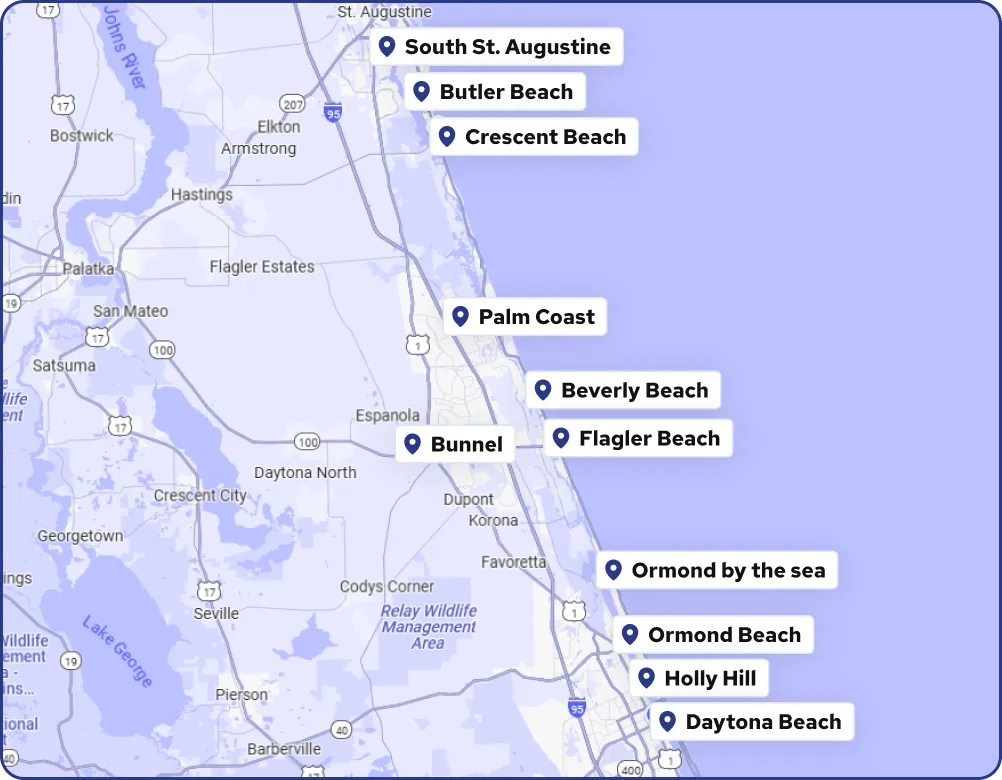
However, living near the coast in places like Ormond by the Sea or Crescent Beach means dealing with salt air. Salt can be brutal on metal coils. When selecting a system, we look for units with specialized coatings to prevent corrosion. If your system has been struggling with the coastal elements, our Heat Pump Repair Daytona Beach FL experts can help diagnose the damage.
Frequently Asked Questions about Heat Pumps
Do heat pumps work in freezing temperatures?
Yes! This is one of the biggest myths about heat pumps. While older models struggled when the temp dropped below 40°F, modern "cold climate" heat pumps can continue to provide efficient heat even when it is -20°F outside. In fact, heat pumps are the primary heating source for half the homes in snowy Norway and Sweden. In Florida, you’ll never have to worry about your heat pump losing its grip on the cold.
What financial incentives are available for heat pumps?
There has never been a better time to upgrade. Thanks to the Inflation Reduction Act (IRA), homeowners can claim federal tax credits of up to $2,000 for heat pump installations. Additionally, many local utilities offer rebates for choosing ENERGY STAR certified equipment. These incentives can significantly lower the initial investment, making the long-term savings even more attractive.
How long does a typical heat pump last?
With professional maintenance, you can expect 15 to 25 years of service. The key to longevity in Florida is keeping the outdoor coils clean of salt and debris and ensuring the refrigerant levels are always topped off. Geothermal systems can last even longer, often exceeding 25 years for the main unit.
Conclusion
The heat pump advantages over traditional HVAC are clear: higher efficiency, lower monthly costs, better air quality, and a smaller environmental footprint. Whether you are in Bunnell, Daytona Beach, or Palm Coast, making the switch to a heat pump is an investment in your home’s future.
At Accu-Temp Heating & Air Conditioning, we’ve been a family-owned staple in the community since 2006. We believe in these systems so much that we offer a 100% satisfaction guarantee on our work. If you’re tired of high energy bills and uneven temperatures, we’re here to help you find the perfect Heat Pump for your lifestyle. Give us a call today to see how we can make your home the most comfortable place on the block!
Contact Us
Latest articles
The Palm Coast Homeowner's Handbook: Expert Mini Split Heat Pump Repair Services

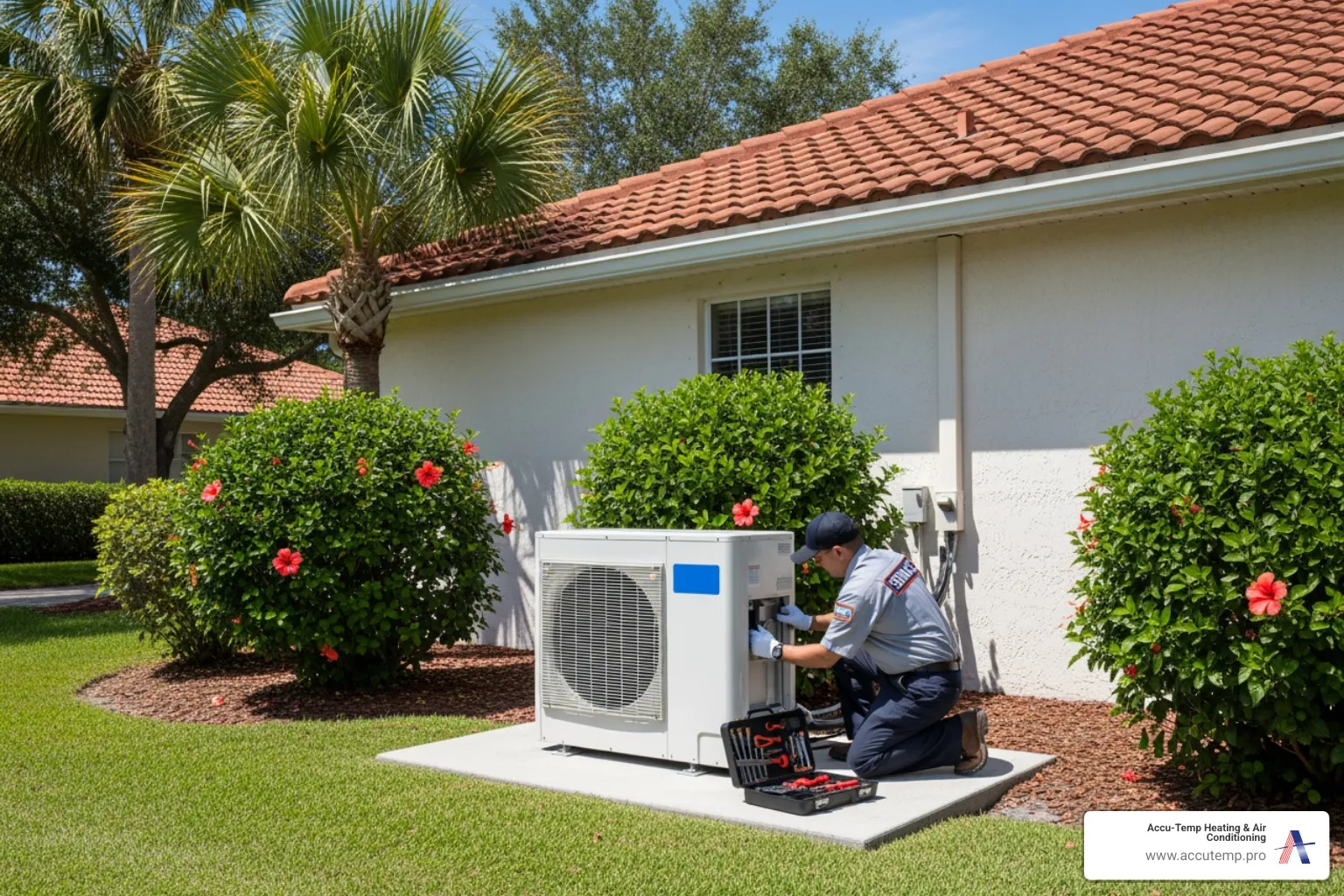
Don't Settle for Less: Expert Mini Split Heat Pump Repair in Palm Coast, FL

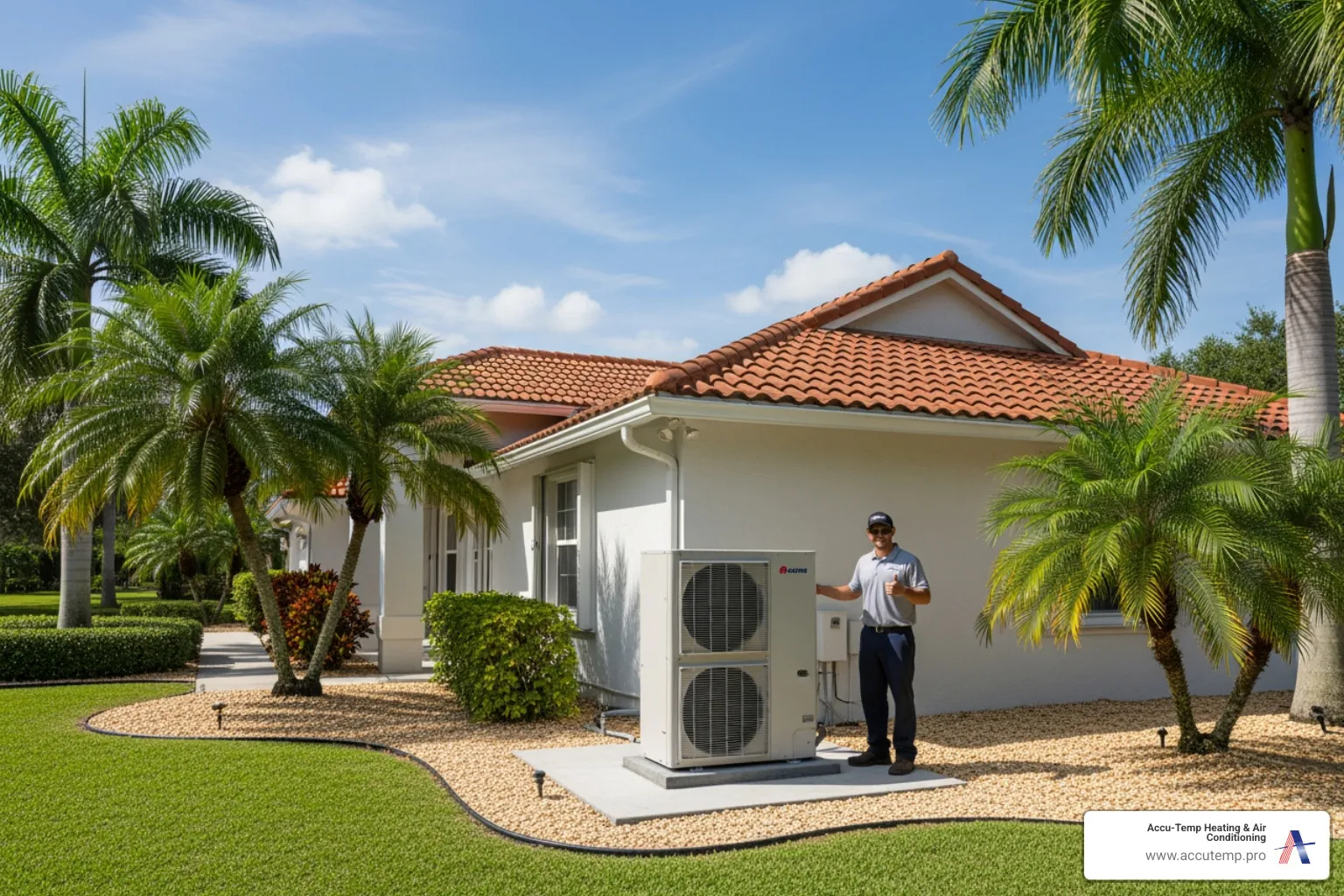
Quality You Can Trust: Top-Rated Heat Pump Installation in Daytona Beach, FL

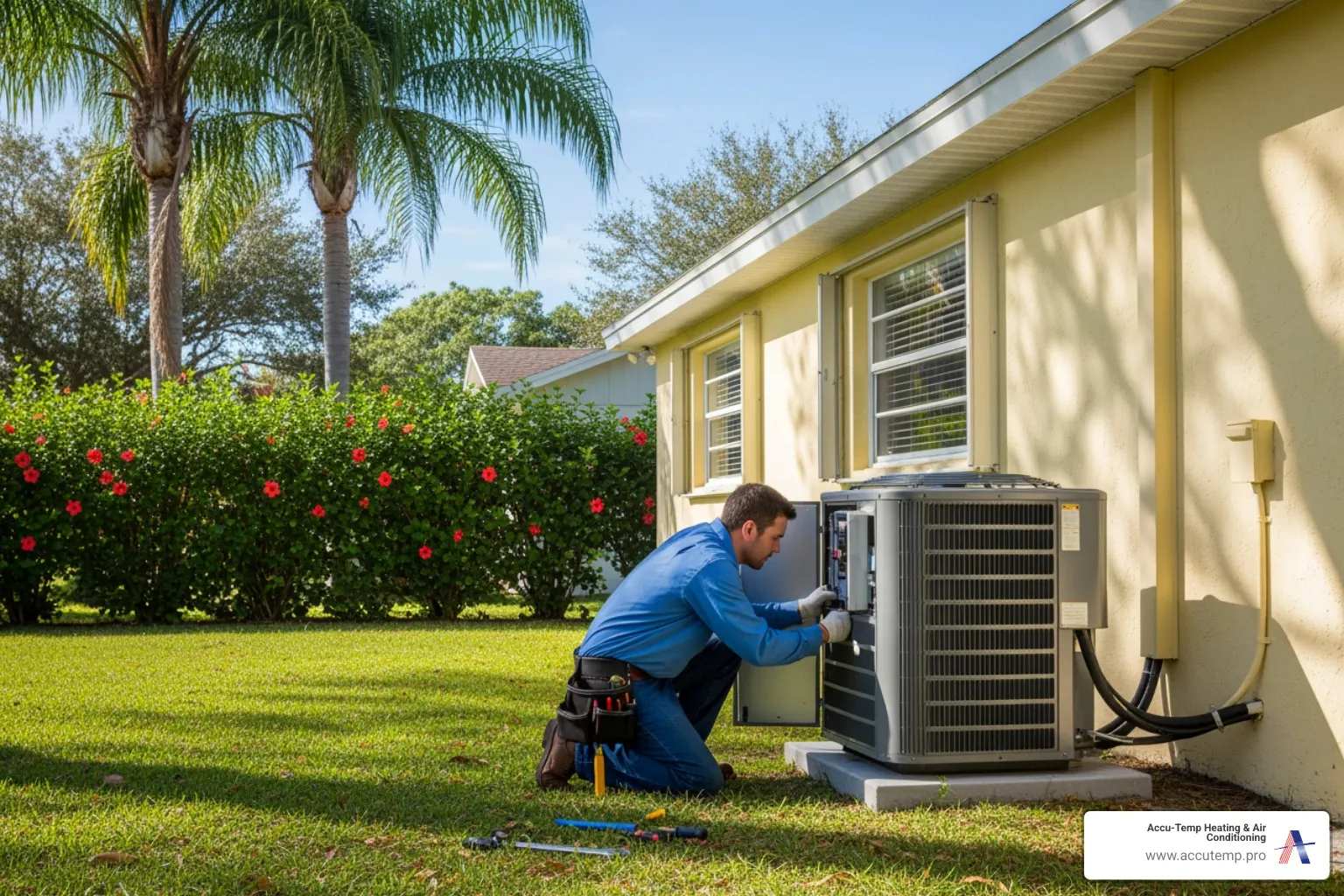
The Ultimate Guide to Heating Installation in Daytona Beach: What You Need to Know
Service Areas