


Why Heat Pump Benefits for Florida Homeowners Make This the Smart HVAC Choice

Heat pump benefits for Florida homeowners are hard to ignore — and if you're looking for the short version, here they are:
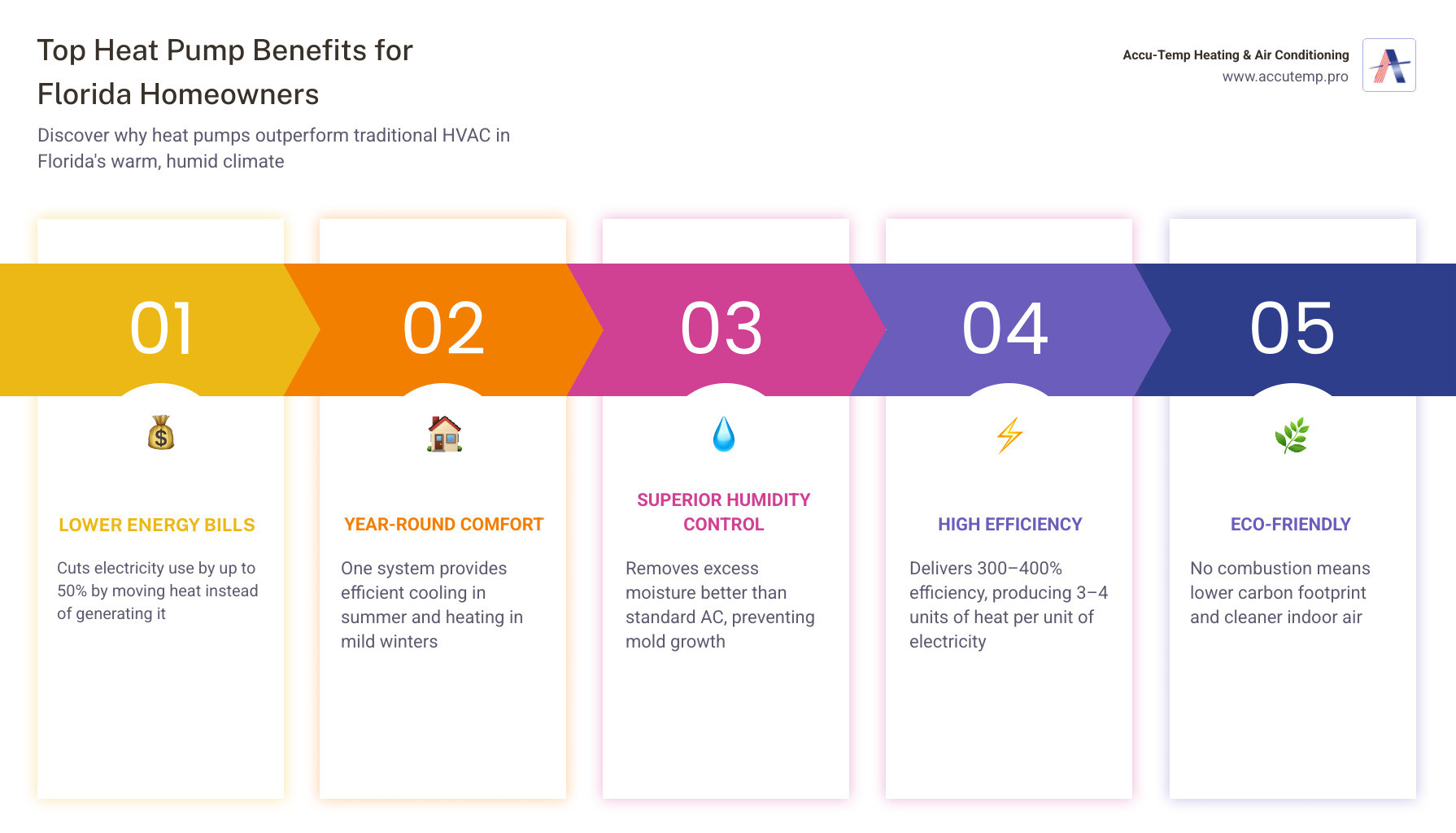
Top Heat Pump Benefits for Florida Homeowners
- Lower energy bills - Heat pumps move heat instead of generating it, cutting electricity use by up to 50%
- Year-round comfort - One system handles both cooling and heating
- Superior humidity control - Reduces indoor moisture better than standard AC, preventing mold
- High efficiency - Delivers 300–400% heating efficiency (3–4 units of heat per unit of electricity used)
- Eco-friendly - No combustion, lower carbon footprint
- Financial incentives - Federal tax credits up to $2,000 available for qualifying installations
- Simplified maintenance - One system instead of separate heating and cooling units
Florida is a unique place to own a home. HVAC systems here don't get a break — they run hard through long, hot, humid summers and still need to perform on those cooler winter nights. In fact, HVAC accounts for over 40% of a Florida home's energy use, making your choice of system one of the biggest financial decisions you'll make as a homeowner.
Here's the thing: most Florida homes are still running a standard central air conditioner paired with electric resistance heat strips for the occasional cold snap. That setup works, but it's far from efficient. A heat pump does everything a traditional AC does — plus it handles heating without the energy drain of resistance heat. For a climate like Florida's, where winters rarely dip below freezing, that's a near-perfect match.
At Accu-Temp Heating & Air Conditioning, we help Florida homeowners understand which system actually fits their home, their climate, and their budget. This guide walks you through everything you need to know.
Understanding Heat Pump Technology in Warm Climates
To understand why we recommend these systems so often in places like Palm Coast and Daytona Beach, you first have to understand that a heat pump doesn't actually "create" heat or cold. Instead, it acts like a heat transporter.
The system uses a refrigerant cycle to move thermal energy from one place to another. In the summer, it works exactly like a standard air conditioner: it absorbs heat from inside your home via evaporator coils and pumps it outside through the condenser unit. However, the "magic" happens thanks to a component called a reversing valve. This valve allows the system to switch directions. In the winter, it extracts heat from the outdoor air—yes, even when it feels chilly to us, there is still plenty of heat energy available—and brings it indoors.
Because it is moving heat rather than burning fuel or using high-resistance electric coils to create it, the process is incredibly efficient. You can learn more about the mechanics in our post on Why Use Heat Pumps And How Do They Work.
How Heat Pumps Perform in Florida’s Mild Winters
In colder northern states, heat pumps sometimes struggle when temperatures drop well below freezing because there is less ambient air heat to extract. But in Florida, our winters are the "sweet spot" for this technology. Since our temperatures rarely stay below freezing for long, a heat pump can operate at peak efficiency almost all winter.
On the rare night when a freeze hits the Flagler or Volusia County area, modern heat pumps are equipped to handle it. However, if you see your system struggling during an extreme cold snap, you might wonder When Should We Switch Our Heat Pump Thermostat To Emergency Heat. Generally, the system handles this transition automatically, ensuring you stay warm without manually toggling switches.
Key Heat Pump Benefits for Florida Homeowners
When we talk about heat pump benefits for Florida homeowners, we aren't just talking about staying cool in July. We're talking about a fundamental shift in how your home uses energy.
One of the most impressive statistics is that a heat pump can deliver 3 to 4 times more heat energy than the electricity it consumes. This results in an efficiency rating of 300% to 400%. Compare that to a traditional electric furnace, which is at best 100% efficient, and the savings become clear. By switching, you're not just saving money; you're significantly reducing your home's carbon footprint. For a deeper dive into these perks, check out the Advantages Of Heat Pump Systems.
Year-Round Comfort: Heat Pump Benefits for Florida Homeowners
One of the best feelings for a homeowner is "set it and forget it" comfort. Because a heat pump is an all-in-one system, you don't have to worry about maintaining a separate furnace and an AC unit. This dual functionality provides consistent temperatures throughout the year.
Whether it’s a 95-degree afternoon in New Smyrna Beach or a 50-degree morning in St. Augustine, the heat pump adjusts its cycle to maintain your preferred setting. If you are new to this technology, our Average Homeowners Guide To Understand Residential Heat Pumps is a great place to start.
Humidity Control and Other Heat Pump Benefits for Florida Homeowners
If you live in Florida, you know that the heat isn't the only enemy—it's the humidity. Florida is the most humid state in the U.S., with dew points often reaching levels that make the air feel heavy.
High-efficiency heat pumps, especially those with variable-speed compressors, are masters of dehumidification. Unlike older systems that just blast cold air and then shut off, variable-speed units run longer at lower speeds. This constant, gentle airflow allows the system to pull significantly more moisture out of the air. This prevents mold growth, protects your furniture, and improves overall indoor air quality. If you ever feel like your home is still muggy despite the AC running, you might want to investigate Why Your Heat Pump Isnt Dehumidifying.
Comparing Heat Pumps vs. Traditional Air Conditioners
While a heat pump looks almost identical to a central AC unit, the internal capabilities differ significantly.
| Feature | Heat Pump | Central AC (with Electric Heat) |
|---|---|---|
| Cooling Method | Refrigerant Cycle | Refrigerant Cycle |
| Heating Method | Heat Transfer (Reversible) | Electric Resistance Heat Strips |
| Heating Efficiency | 300% - 400% | 100% |
| Humidity Control | Excellent (Variable Speed) | Standard |
| Annual Savings | Up to $415+ | Baseline |
Most traditional Florida setups use "heat strips" for warmth. These are essentially giant versions of the coils inside your toaster. They get red hot and blow air over them. It works, but it devours electricity. A heat pump avoids this "brute force" heating, which is why it's often the winner in the Should I Get An Ac Or Heat Pump debate.
Efficiency Ratings and Long-Term Savings
When shopping for a system, you'll see SEER2 (for cooling) and HSPF2 (for heating) ratings. Higher numbers mean better efficiency. Replacing an older, inefficient unit with an ENERGY STAR-certified heat pump can cut your cooling costs by a massive margin—sometimes reducing electricity use by up to 50% in our humid climate.
Furthermore, the federal government currently offers the Energy Efficient Home Improvement Credit. This provides a 30% tax credit for qualifying heat pump installations, with a maximum benefit of up to $2,000 per year. When you combine these tax credits with the lower monthly utility bills, the system often pays for itself within 5 to 10 years.
Selecting the Right System for Your Florida Home
Not every home needs the same type of heat pump. We look at your home's layout, insulation, and ductwork to determine the best fit.
- Air-Source Heat Pumps: The most common type, using the outdoor air to exchange heat.
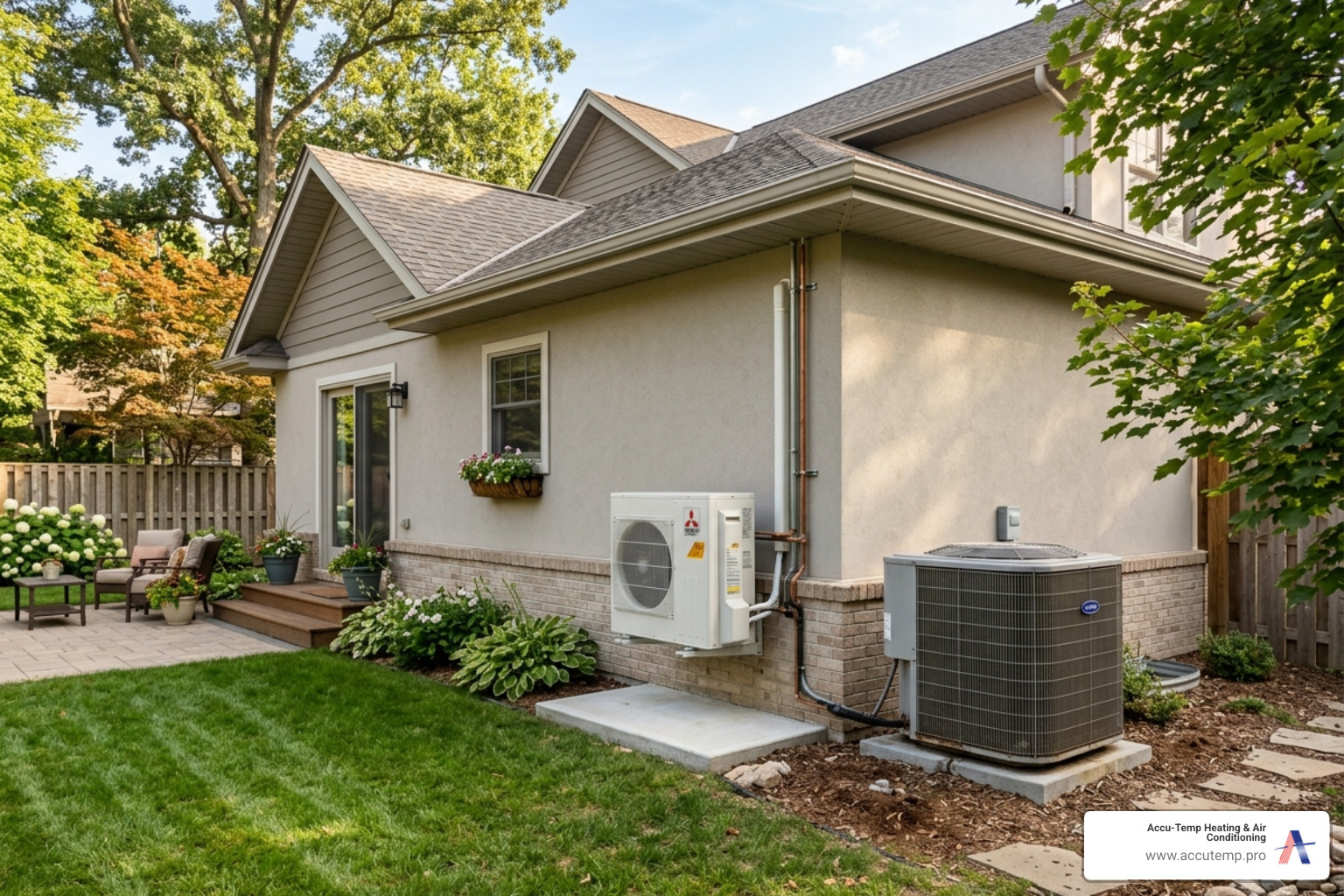
- Ductless Mini-Splits: Perfect for homes without existing ductwork or for "Florida rooms" and additions. They allow for zoned cooling, so you only pay to cool the rooms you're actually using.
- Geothermal Heat Pumps: These use the constant temperature of the ground or a water source. While more complex to install, they offer the highest possible efficiency.
We always perform a "Manual J" calculation before any Heat Pump Installation Replacement Palm Coast Fl. This ensures the system is sized perfectly for your square footage; an oversized unit will short-cycle and leave your home humid, while an undersized unit will run forever and wear out early.
Performance in Coastal and Inland Environments
Living in coastal areas like Beverly Beach or Crescent Beach presents unique challenges. Salt air is highly corrosive and can eat through standard metal coils in just a few years. For our coastal neighbors, we recommend systems with specialized corrosion-resistant coatings.
Additionally, sandy soil can clog outdoor units if they aren't elevated properly. We take these local factors into account during every Heat Pump Installation Replacement South St Augustine Fl to ensure your investment lasts as long as possible.
Maintenance Strategies for the Florida Environment
Because a heat pump works year-round, it doesn't get the "winter break" that a furnace might. This makes regular maintenance non-negotiable.
To keep your system running at peak performance, we recommend:
- Filter Changes: Check them every 30 days. In Florida, dust and pet dander can clog a filter quickly, forcing the motor to work harder.
- Coil Cleaning: Outdoor coils get coated in salt, pollen, and dirt. A clean coil transfers heat much more efficiently.
- Drain Line Clearing: Algae loves our warm, wet climate. We clear your condensate drain lines to prevent backups that can flood your home.
For a full breakdown of what we check, see our Heat Pump Maintenance Complete Guide.
Extending System Lifespan in High Humidity
A well-maintained heat pump in Florida typically lasts between 10 and 15 years. However, the high humidity and salt air can shorten that lifespan if you're not careful. One common thing homeowners notice is the "defrost cycle." During a rare cold morning, the outdoor unit might frost over. The system will automatically switch to cooling mode for a few minutes to melt that ice. If your system seems to be doing this too often, it might be one of the Common Heat Pump Defrost Cycle Problems.
Consistency is key for Heat Pump Maintenance Lasting Performance. We’ve seen units in Holly Hill and Bunnell reach the 20-year mark simply because the owners never skipped a tune-up.
Professional Servicing for Peak Performance
While there are things you can do yourself, like changing filters, a professional eye is needed to check refrigerant levels and tighten electrical connections. We recommend biannual inspections—once before the summer heat hits and once before the winter chill.
Whether you need Heat Pump Service Maintenance Daytona Beach Fl or Heat Pump Service Maintenance Palm Coast Fl, our team is trained to spot small issues before they become expensive midnight emergencies.
Frequently Asked Questions about Heat Pumps
How long do heat pumps last in Florida?
Typically, you can expect 10 to 15 years. Coastal homes might see the lower end of that range due to salt air, while inland homes in places like Palatka or Bunnell might see the higher end. The biggest factor in longevity is Heat Pump Maintenance Flagler Beach Fl.
Do heat pumps work during Florida cold snaps?
Absolutely. Modern heat pumps can extract heat even when it's freezing outside. Most systems include an auxiliary heat backup (electric heat strips) that only kicks in if the temperature drops so low that the heat pump needs a little help. You can find more troubleshooting tips in our Heat Pumps Repair Guide Flagler Beach Fl.
Are there tax credits for heat pump installation?
Yes! Under the Energy Efficient Home Improvement Credit, you can claim 30% of the project cost, up to $2,000. This is a federal tax credit, not just a deduction, meaning it can directly reduce the amount of tax you owe.
Conclusion
Choosing the right HVAC system is about more than just staying cool; it's about making a smart investment in your home's future. The heat pump benefits for Florida homeowners—from massive energy savings to superior humidity control—make it the clear winner for our unique climate.
At Accu-Temp Heating & Air Conditioning, we’ve been serving our neighbors in Daytona, Ormond Beach, and Palm Coast since 2006. As a family-owned business, we stand behind our work with a 100% satisfaction guarantee and flexible financing options to make your upgrade easier. If you're ready to experience the comfort and savings of a modern Heat Pump, we're here to help. Give us a call today, and let’s find the perfect system for your Florida home.
Contact Us
Latest articles



Service Areas