



Mini Split Stopped Cooling? Rapid Diagnosis and Repair Services
When your ductless system fails or starts blowing warm air, the rising humidity inside your home becomes noticeable almost immediately. In the Bunnell heat, a malfunction is not just an inconvenience; it is an emergency that threatens your comfort and indoor air quality. Accu-Temp Heating and Air Conditioning provides rapid, precision-based repair services to restore your cooling capacity without unnecessary delays. Contact us immediately to schedule a certified technician or ask about our financing options to get your system running today.
We understand that ductless systems require specialized knowledge that general HVAC contractors often lack. Our team arrives equipped to troubleshoot communication errors, refrigerant leaks, and mechanical failures on the spot.
- Restore your home’s comfort with same-day diagnostic and repair capabilities.
- Rely on technicians specifically trained in inverter technology and ductless zoning.
- Eliminate pricing surprises with upfront quotes before any work begins.
All repairs are performed by licensed professionals and backed by a comprehensive warranty for your long-term peace of mind.
What to Expect From Our Ductless Repair Service
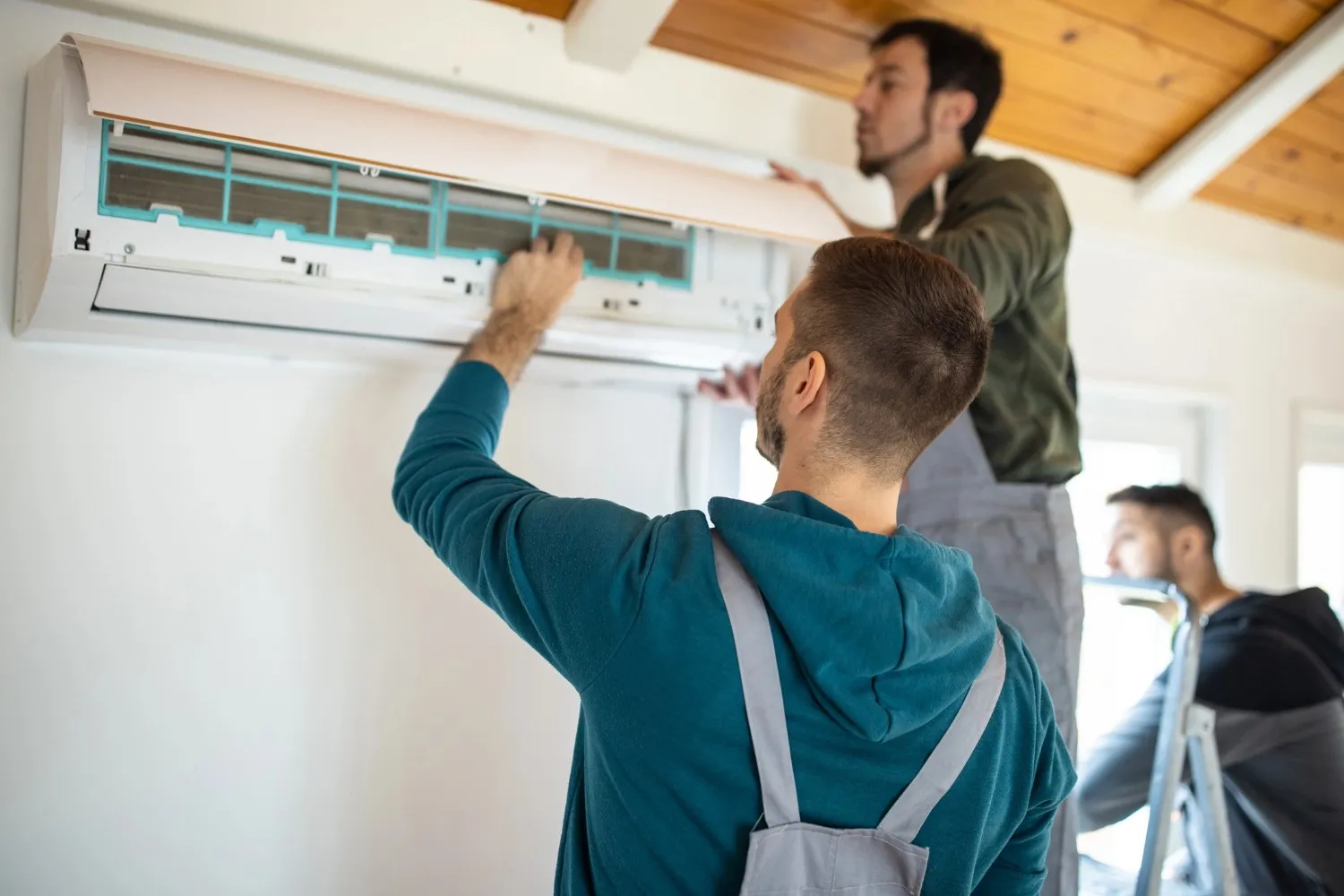
A mini-split system operates differently than traditional forced-air units, relying on sophisticated inverter boards and complex electrical communication between indoor and outdoor units. When you request a repair, you receive a technical deep-dive into the specific components that drive these high-efficiency systems. We do not simply swap parts and hope for the best; we isolate the root cause of the failure.
Comprehensive System Diagnostics
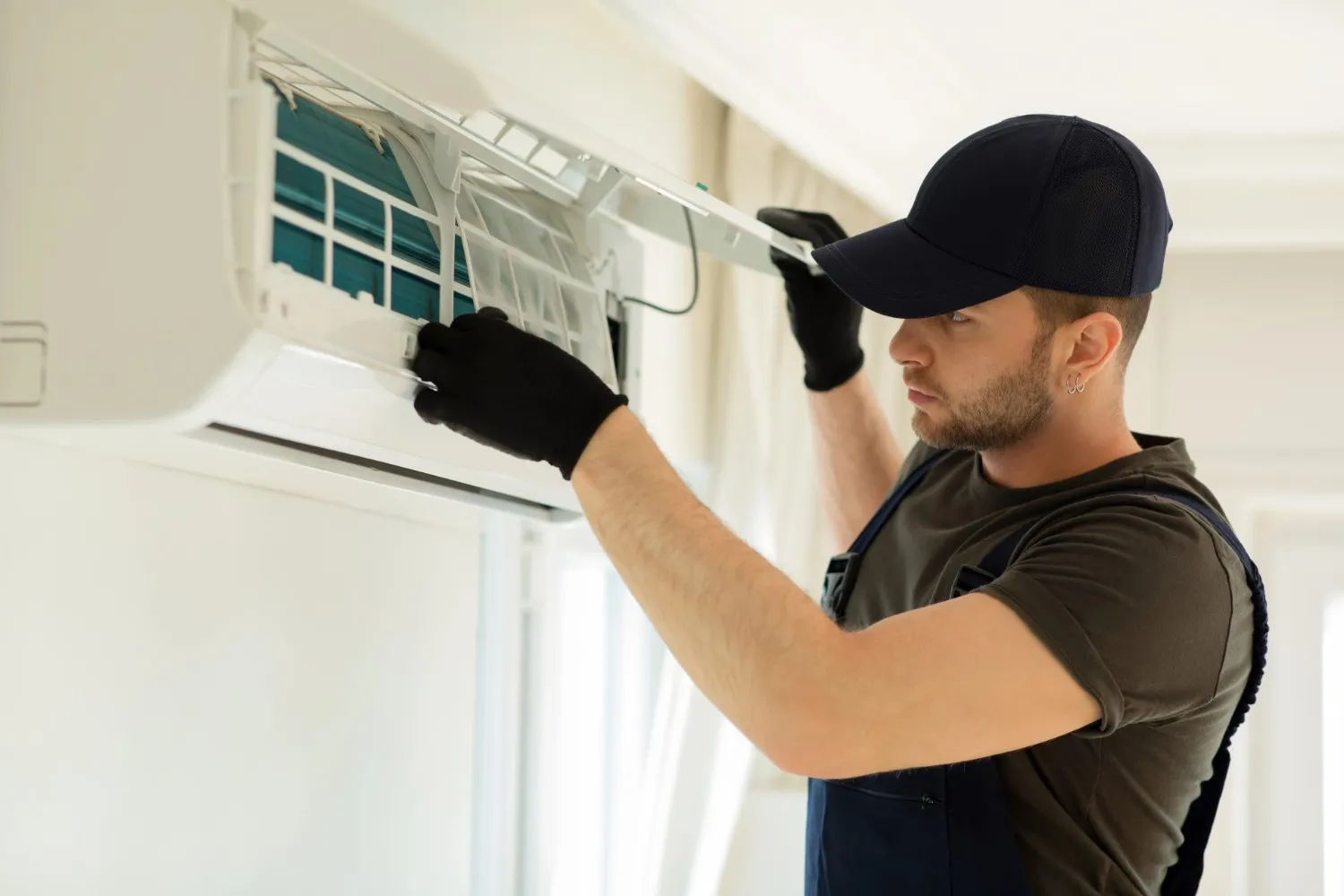
The repair visit begins with a systematic evaluation of both the indoor air handler and the outdoor compressor. Because mini-splits are often zoned, a failure might be isolated to a single room or affect the entire house.
- Electrical and Communication Testing: We test the voltage and communication lines between the head unit and the condenser. Communication errors are a common source of mini-split failures, often triggered by power surges or wiring degradation.
- Refrigerant Charge Verification: Ductless systems are critically sensitive to refrigerant levels. Being even slightly undercharged or overcharged can shut down the system or damage the compressor. We measure superheat and subcooling levels to ensure the charge is exact.
- Sensor and Thermostat Calibration: Mini-splits rely on thermistors (temperature sensors) to regulate fan speed and compressor output. If these sensors are out of calibration, the unit may short-cycle or fail to reach the set temperature.
- Drainage System Inspection: In humid climates, condensate drain lines can easily clog with algae or mold, causing the indoor unit to leak water down your wall. We inspect and clear these lines to prevent water damage.
Addressing Common Mini-Split Failures
Our technicians carry inventory for the most frequent points of failure in ductless brands. This preparation minimizes downtime and allows us to resolve many issues in a single trip.
- Leaking Indoor Units: Water dripping from the head unit usually indicates a clogged drain line, a cracked drain pan, or a frozen evaporator coil. We address the blockage and check for underlying airflow issues.
- Inverter Board Failures: If the outdoor unit refuses to start or ramps up and down erratically, the main control board may be compromised. We diagnose these electronic faults accurately to determine if a board replacement is necessary.
- Compressor Issues: The compressor is the heart of the system. We test its windings and mechanical operation to determine if it can be repaired or if a major component replacement is required.
- Mold and Mildew Buildup: Due to the moist environment inside the air handler, mold can grow on the blower wheel, restricting airflow and causing odors. We perform deep cleaning to restore air volume and quality.
The Repair Process: Step-by-Step
We have streamlined our service protocol to ensure that your experience is efficient, transparent, and respectful of your time. From the moment you notice an issue in your Bunnell home to the final system test, our process is designed to eliminate uncertainty.
- Initial Scheduling and Dispatch: You contact our office, and we prioritize your service request based on urgency. You receive a clear arrival window so you aren't stuck waiting all day.
- On-Site Assessment: The technician arrives fully equipped and respects your property by using shoe covers and protective mats. They listen to your observations regarding the noise, smell, or behavior of the unit.
- Root Cause Identification: Using advanced diagnostic tools, the technician isolates the specific mechanical or electrical failure. This goes beyond reading error codes; it involves verifying the physical condition of the components.
- Transparent Quotation: Once the issue is identified, we provide a written quote detailing the necessary repairs, parts, and labor. There are no hidden fees, and work only proceeds with your explicit approval.
- Execution of Repairs: The technician performs the repair using OEM (Original Equipment Manufacturer) or high-quality equivalent parts to ensure compatibility and performance.
- System Testing and Validation: After the repair is complete, we run the system through a full operational cycle—cooling, heating (if applicable), and dehumidification—to verify that the problem is resolved and the system is operating at peak efficiency.
- Site Cleanup and Reporting: We clean up the work area, removing any debris or old parts. You receive a detailed service report outlining what was done and any recommendations for future maintenance.
Repair vs. Replacement: Making the Right Financial Decision
Homeowners often face the difficult choice between repairing an aging mini-split or investing in a new system. While our primary goal is to repair your existing equipment, there are mathematical and practical tipping points where replacement becomes the more prudent financial decision.
The Age and Refrigerant Factor
Mini-split systems generally have a lifespan of 12 to 15 years, depending on usage and maintenance.
- Under 10 Years Old: If your system is relatively new and well-maintained, repair is almost always the best option, unless the cost of the repair approaches 50% of the replacement value.
- Over 12 Years Old: As systems age, parts become harder to source, and the risk of secondary failures increases. If a major component like a compressor fails in an older unit, replacement is often more cost-effective.
- Refrigerant Type: If your older unit utilizes R-22 refrigerant (Freon), which has been phased out, repair costs involving refrigerant will be astronomical. Upgrading to a system that uses R-410A or newer refrigerants is usually the smarter move.
The Cost-Benefit Analysis
We help you run the numbers so you can make an unemotional, fact-based decision.
- The 50% Rule: If the cost of the repair equals or exceeds 50% of the cost of a new system, replacement is generally recommended. A new system offers a fresh warranty, whereas a repair only guarantees the specific part that was fixed.
- Frequency of Breakdowns: If this is the third time you have called for repairs in the last two years, your system is likely signaling the end of its useful life. Continually pouring money into a dying system is rarely economical.
- Efficiency Gains: Modern mini-splits offer significantly higher SEER (Seasonal Energy Efficiency Ratio) ratings than models from a decade ago. Replacing an old unit can lower your monthly energy bills, helping to offset the installation cost over time.
Performance and Comfort Issues
Sometimes a unit runs but simply cannot keep up with the demand.
- Inadequate Cooling: If the system is sized incorrectly or has lost significant compression efficiency, no amount of minor repairs will make it cool effectively during peak summer heat.
- Noise Levels: As bearings wear out and motors degrade, older systems become noisy. If quiet operation is a priority, replacement restores the near-silent performance mini-splits are known for.
Local Climate Factors Affecting Mini-Splits
Operating a ductless AC in Bunnell requires specific attention to environmental factors that do not exist in drier or cooler climates. The specific weather patterns here exert unique stresses on your equipment, necessitating a localized approach to repair and maintenance.
Humidity and Biological Growth
The high humidity levels in this region present a constant challenge for air conditioning equipment. Mini-split heads are particularly susceptible to biological growth because they are located directly in the living space.
- Blower Wheel Mold: The blower wheel inside the head unit is constantly wet from condensation. Without regular cleaning, mold and dust create a thick paste on the blades, drastically reducing airflow and efficiency. This is the number one cause of "low airflow" complaints in our area.
- Drain Line Algae: The warm, dark, wet environment of a condensate drain line is a breeding ground for algae (often called "zooglea"). This gelatinous substance clogs lines quickly, leading to water backing up and damaging drywall or flooring.
Salt Air and Corrosion
Even if you are not directly on the oceanfront, the salt content in the air throughout the coastal region accelerates corrosion on outdoor units.
- Fin Rot: The aluminum fins on the condenser coil can deteriorate, becoming brittle and flaking away. This reduces the unit's ability to release heat, causing the compressor to work harder and overheat.
- Electrical Connections: Salt air can corrode electrical terminals and ground wires, leading to intermittent electrical faults or "ghost" errors that require careful inspection to find.
Storm Season and Power Quality
During hurricane season, the power grid can be unstable. Mini-splits are inverter-driven, meaning they rely on complex electronics to convert AC power to DC power.
- Voltage Spikes: Lightning strikes and grid switching can send surges through your home’s wiring. Inverter boards are highly sensitive to these spikes and can be fried instantly without proper surge protection.
- Wind Debris: High winds can blow leaves, dirt, and debris into the outdoor unit, blocking airflow. After a storm, it is crucial to check the outdoor unit for obstructions before running it at full capacity.
Why Specialized Mini-Split Expertise Matters
Ductless heating and cooling systems are technically distinct from standard central air conditioners. They require specific tools, distinct training, and a deep understanding of inverter logic. Accu-Temp Heating and Air Conditioning has invested heavily in the training required to service these complex units effectively.
Technical Precision
Standard AC gauges and diagnostic techniques can sometimes damage a mini-split.
- Micron Gauges: We use digital micron gauges for evacuation to ensure the system is completely free of moisture and non-condensables, which is critical for the longevity of the POE oil used in these compressors.
- Torque Specifications: Flare connections—the point where the copper tubing connects to the unit—must be tightened to precise torque specifications. Under-tightening causes leaks; over-tightening cracks the flare. We use torque wrenches to ensure a leak-free seal every time.
- Inverter Analysis: Diagnosing a bad board versus a bad motor requires understanding DC voltage ramps and communication wave patterns. Our technicians are skilled in reading these electronic signatures.
Inventory and Availability
One of the biggest frustrations for homeowners is waiting weeks for a simple part.
- Stocked Trucks: We maintain an inventory of common failure items, such as capacitors, thermistors, and control boards for major brands.
- Distributor Relationships: When a specialized part is needed, our established relationships with local and regional distributors allow us to source components faster than the competition.
Warranty and Compliance
We protect your investment by adhering to strict industry standards.
- Warranty Preservation: Unauthorized repairs or improper parts can void the manufacturer's warranty. We ensure that all work is compliant with warranty terms so you remain covered.
- Code Compliance: All electrical and refrigerant work is performed in accordance with local building codes and environmental regulations.
When your comfort is compromised, you need a service provider who combines technical expertise with a commitment to speed and transparency. We diagnose the issue, explain the solution, and execute the repair to get you back to cool, comfortable living.
Call Us Now
Don't let a broken mini-split ruin your day—call us now to schedule your priority repair service.
Contact Us
Why Choose One Company for Everything?

Simplicity

Expertise

Savings
Service Areas