



Is Your Dryer Vent Clogged? Discover the Signs
Struggling with clothes not drying properly or noticing unusual heat radiating from your dryer is often the first indication of restricted airflow. A clogged dryer vent might be the culprit, creating safety hazards and efficiency issues for homeowners in Butler Beach. Contact us today to schedule a comprehensive inspection or call to discuss your ventilation concerns.
When airflow is restricted, your appliance works harder than necessary, leading to three critical outcomes for your home:
- Reduce the immediate risk of dryer fires by eliminating trapped, flammable lint.
- Lower monthly energy bills by improving dryer efficiency and reducing cycle times.
- Extend the operational lifespan of your dryer unit through professional maintenance.
Licensed and insured professionals are ready to enhance your home safety today.
Analyzing the Impact of Restricted Airflow
A dryer vent is more than just an exhaust pipe; it is the lungs of your laundry system. When this pathway becomes obstructed, the consequences ripple through your home’s safety and energy consumption. In Butler Beach, where humidity levels remain high throughout the year, lint does not stay dry. It absorbs moisture from the humid air and the damp clothes, becoming heavy and sticky. This creates a dense blockage that standard cleaning methods often fail to remove.

The primary function of the vent is to expel hot, moist air and lint byproducts to the exterior of the home. When lint builds up, it reduces the diameter of the duct, causing back pressure. This pressure forces the dryer motor to work harder to push air out, often leading to mechanical failure. Furthermore, the heat that cannot escape builds up inside the drum and the chassis of the machine. This excess heat is the primary cause of dryer-related house fires.
Residents often ignore the early warning signs, assuming the dryer is simply getting old. However, if the top of your dryer is hot to the touch while running, or if your laundry room feels like a sauna, the vent is likely blocked. Accu-Temp Heating and Air Conditioning addresses these symptoms directly, ensuring the entire venting path is clear from the connection point to the exterior termination.
Comprehensive Vent Cleaning Scope
Professional service goes beyond simply brushing out the easy-to-reach lint trap. A complete cleaning service involves a systematic approach to the entire duct run. This is crucial because the most dangerous obstructions usually occur deep within the walls, attics, or crawl spaces where homeowners cannot reach.
The service provided focuses on restoring the dryer duct to its original diameter and airflow capacity. This includes:
- Airflow Measurement: Technicians begin by measuring the exit velocity of the air at the exterior vent. This establishes a baseline to determine the severity of the blockage.
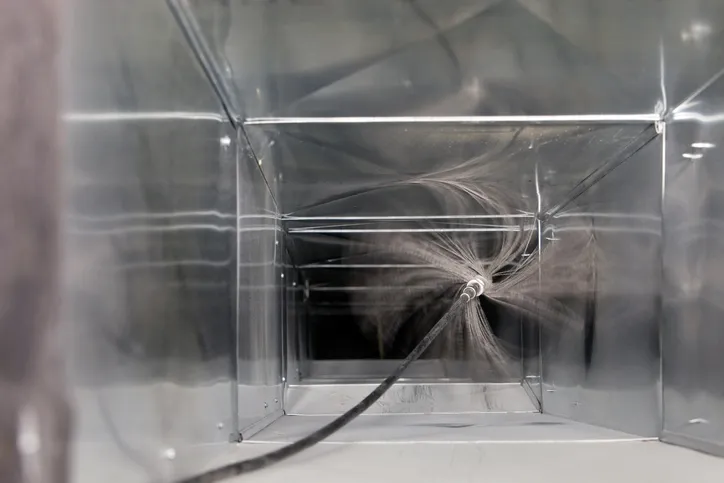
- Debris and Lint Removal: Using specialized rotary brushes and high-powered vacuum equipment, all accumulated lint is agitated and extracted. This removes not only loose lint but also the caked-on residue that adheres to the duct walls.
- Connection Inspection: The transition hose—the flexible piece connecting the dryer to the wall—is inspected for kinks, tears, or improper materials. This is a common failure point that restricts air right at the source.
- Booster Fan Cleaning: For homes with long duct runs that utilize booster fans, the blades are cleaned to ensure proper rotation and air movement.
- Exterior Vent Clearing: The termination point outside the home is cleared of any screens or covers that may be trapping lint. Screens are generally discouraged on dryer vents as they create immediate blockages.
The Execution Process: How Cleaning Works
Understanding the sequence of a professional cleaning helps homeowners prepare for the service. The goal is to clean the system thoroughly without contaminating the home with dust or lint.
- First, the technician locates the dryer and the exterior vent cap. Access to both points is necessary to ensure the line is cleaned from end to end. If the dryer is gas-powered, the gas line connection is checked for safety before moving the unit.
- Next, the dryer is disconnected from the wall to access the main duct line. A high-efficiency particulate air (HEPA) vacuum is connected to the system to create negative pressure. This ensures that as lint is loosened, it is immediately sucked into the containment unit rather than blowing back into the laundry room.
- Then, a rotary brush system is fed through the ductwork. Unlike static brushes, rotary tools spin at high speeds, scrubbing the interior walls of the duct. This action dislodges heavy, wet lint clumps that are common in humid environments. The tool is flexible, allowing it to navigate elbows and turns within the wall.
- After the physical cleaning, a final airflow test is conducted. The technician verifies that the static pressure has dropped and the air velocity has increased to safe levels.
- Finally, the transition hose is reconnected, ensuring it is not crushed or kinked when the dryer is pushed back into place. The area behind the dryer is vacuumed to remove any residual dust.
Repair vs. Replacement: Making the Right Decision
Cleaning is not always the solution. In some instances, the existing ductwork is damaged, made of improper materials, or routed incorrectly. Knowing when to repair or replace the venting system is vital for long-term safety — explore financing options.
When to Clean:
If the ductwork is rigid metal, installed correctly, and simply full of lint, a professional cleaning is the correct course of action. This restores the system to peak efficiency. Routine cleaning is maintenance; it protects the asset you already have.
When to Repair:
Minor damage, such as a disconnected joint in the attic or a crushed section of pipe, requires repair. If a section of the duct has separated, it pumps moist, lint-filled air into your walls or attic, promoting mold growth and rotting wood. Repairing these specific sections seals the system back up without requiring a full overhaul.
When to Replace:
Replacement is necessary when the ductwork violates current building codes or poses a significant fire hazard.
- Plastic or Vinyl Ducts: If your home utilizes white plastic or thin vinyl accordion-style hoses, these must be replaced immediately. They are highly flammable and trap lint easily due to their ribbed texture.
- Crushed Foil Ducts: While foil is better than plastic, it crushes easily. If the transition hose behind the dryer is flattened, it should be replaced with semi-rigid aluminum venting.
- Improper Routing: Ducts that are too long or have too many 90-degree turns exceed the dryer's ability to push air. In these cases, re-routing the vent to a shorter path is the only way to ensure safety and efficiency.
Local Considerations: Humidity and Seasonal Factors
Operating a dryer in Butler Beach requires specific attention to environmental factors. The local climate significantly influences how quickly vents clog and the type of debris found within them.
- High Humidity Impact: The coastal humidity means that air entering the dryer is already moisture-laden. As the dryer heats up, it extracts moisture from clothes. This combination creates heavy, wet lint that sticks to duct walls like plaster. Unlike dry lint found in arid climates, this "wet" lint does not blow out easily and requires mechanical agitation to remove.
- Salt Air Corrosion: For exterior vent hoods, the salt air can corrode metal dampers, causing them to stick. A stuck damper prevents the vent from opening when the dryer is on, blocking airflow completely. It can also prevent the damper from closing, allowing pests to enter.
- Pest Intrusion: During cooler months or storm seasons, birds and rodents seek shelter. A warm dryer vent is an attractive nesting ground. Nests block airflow entirely and are highly flammable. If a blockage is caused by nesting material, simple cleaning is insufficient; the nest must be removed, and a pest-proof (but lint-safe) cover should be installed.
- Condensation Issues: In uninsulated spaces, hot dryer air moving through a cold duct can cause condensation. This water accumulates in the pipe, leaking through joints and causing water damage to ceilings or walls. Ensuring ducts are properly insulated is critical in specific home designs.
Recognizing the Dangers of Carbon Monoxide and Mold
For homeowners with gas dryers, a blocked vent poses a threat beyond fire: carbon monoxide poisoning. Gas dryers produce carbon monoxide as a byproduct of combustion. Under normal conditions, this odorless, colorless gas is vented safely outdoors. However, if the vent is clogged, the gas is forced back into the laundry room and circulating air of the home.
Even with electric dryers, the health risks are significant. When moist air cannot escape, it backs up into the home. This excess moisture increases the relative humidity of the laundry area and surrounding rooms. In Florida's climate, this creates an ideal breeding ground for mold and mildew. Homeowners may notice a musty smell on their clothes or see mold spots developing on the walls near the laundry area. Clearing the vent eliminates this moisture trap, protecting indoor air quality.
The Role of Professional Equipment
Attempting to clean a dryer vent with a shop vacuum or a DIY kit often leads to impacted clogs. Consumer-grade kits typically include flimsy rods that can snap off inside the duct, turning a cleaning job into an expensive retrieval project. Furthermore, pushing a brush without simultaneous high-powered extraction often shoves the lint blockage deeper into the pipe, compacting it into a solid mass at a bend or elbow.
Professional equipment is designed to navigate the twists and turns of rigid ductwork without causing damage. The brushes used are sized specifically to the diameter of the duct, ensuring wall-to-wall contact for a thorough clean. The vacuum systems used are industrial-grade, capable of pulling air at a volume that ensures every loosened particle is removed from the home. This distinction is vital for ensuring that the fire hazard is actually removed rather than just displaced.
Optimizing Dryer Efficiency and Clothing Care
Beyond safety, a clean vent directly impacts the wallet. A dryer breathing freely runs shorter cycles. When a vent is clogged, a standard 45-minute cycle can extend to 90 minutes or require multiple runs to get jeans or towels dry. This doubles the electricity or gas usage for every load. Over the course of a year, this inefficiency adds up to significant unnecessary utility costs.
Additionally, restricted airflow damages clothing. The excessive heat trapped in the drum creates a "baking" effect on fabrics. This breaks down fibers, causes colors to fade prematurely, and destroys elasticity in items like athletic wear. By ensuring the dryer can cycle air correctly, the appliance operates at the intended temperature, preserving the quality and longevity of your wardrobe.
Final Assessment and Service Differentiators
Choosing the right service provider means selecting a team that understands the physics of airflow and the local building standards. The focus remains on delivering a quantifiable improvement in safety and performance. Technicians do not simply sweep and leave; they verify the results through instrumentation and visual inspection.
Every service visit prioritizes the integrity of the home. Technicians wear protective shoe covers, use drop cloths to protect flooring, and manage all debris containment. The objective is to leave the laundry room cleaner than it was found, with a dryer that operates like new.
Accu-Temp Heating and Air Conditioning provides the expertise required to manage these hidden hazards effectively. The combination of specialized tooling, local climate knowledge, and adherence to safety protocols ensures that the dryer vent system functions safely and efficiently.
Make Your Home Safer With a Cleaner, More Efficient Dryer Vent
When your dryer vent is obstructed, the risk extends far beyond slow drying times—it affects your energy costs, indoor air quality, and overall home safety. Restoring proper airflow is one of the simplest and most effective steps you can take to protect your home and prevent dangerous vent-related fires. With one thorough service visit, Accu-Temp Heating and Air Conditioning delivers measurable improvements in performance, safety, and efficiency.
Protect your home from hidden fire hazards and stop overpaying on energy bills today.
Schedule your professional dryer vent cleaning now.
Contact Us
Why Choose One Company for Everything?

Simplicity

Expertise

Savings
Service Areas