



Is Poor Indoor Air Quality Compromising Your Health and Comfort?
Battling high humidity and allergens in your home can compromise your health and comfort, especially given the wet, subtropical climate typical of Bunnell. While standard air conditioning cools your space, it often fails to address invisible contaminants, excess moisture, and biological growth that thrive in this region. Discover how our IAQ services can ensure cleaner, healthier air indoors by contacting Accu-Temp Heating and Air Conditioning today to schedule a comprehensive air quality assessment or discuss financing options for a whole-home solution.
- Rapid response and assessment to address air quality concerns immediately.
- Comprehensive solutions, from advanced air filtration to mold remediation.
- Specialized services backed by local expertise and clear communication.
- Licensed, certified, and ready to enhance your indoor environment.
Comprehensive Indoor Air Quality Solutions for Your Home
Achieving a healthy indoor environment requires more than just changing a standard fiberglass filter once a month. For homeowners in Bunnell, FL, where humidity levels remain high for a significant portion of the year, a multi-layered approach is necessary to combat pollutants. True indoor air quality (IAQ) management involves controlling humidity, eliminating biological contaminants, and capturing particulate matter that circulates through your ductwork.
We provide a suite of integrated solutions designed to work seamlessly with your existing HVAC infrastructure. These solutions are not temporary fixes but permanent upgrades to your home’s mechanical systems.
Whole-Home Dehumidification
Standard air conditioners remove some moisture, but their primary job is cooling. In our region, this is often insufficient. A dedicated whole-home dehumidifier works in conjunction with your AC to maintain relative humidity between 45% and 55%. This prevents the growth of mold and dust mites, which thrive in environments above 60% humidity.
- Removes gallons of excess moisture daily without overcooling the home.
- Reduces the strain on your air conditioner, potentially extending its lifespan.
- Can run independently of the cooling cycle, keeping air dry during milder, sticky days.
Ultraviolet (UV) Germicidal Lights
Biological growth on cooling coils is a common source of "dirty sock" syndrome and airborne spores. UV-C light systems are installed directly inside the air handler or ductwork. The ultraviolet energy destroys the DNA of mold, bacteria, and viruses, rendering them unable to reproduce.
- Sanitizes the air handler’s coil system continuously.
- Prevents slime build-up in the drain pan.
- Improves airflow by keeping internal components clean.
High-Efficiency Media Air Cleaners
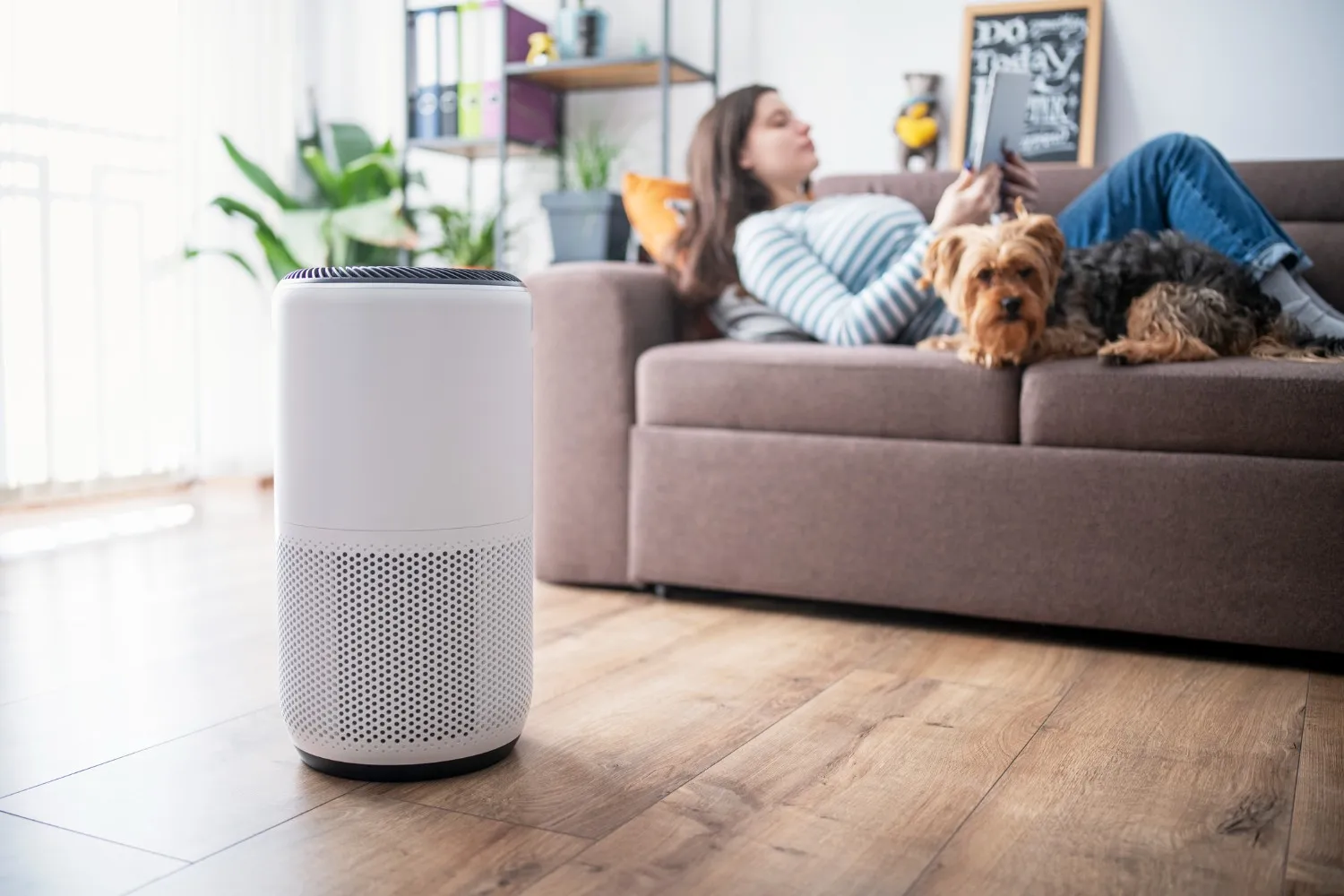
Standard one-inch filters are designed primarily to protect the equipment, not your lungs. High-efficiency media air cleaners are thicker (often 4 to 5 inches) and have a much larger surface area. These systems can trap microscopic particles, including pet dander, pollen, and fine dust, that pass right through standard hardware store filters.
- Captures up to 99% of airborne particles passing through the system.
- Requires less frequent replacement compared to standard filters (usually every 6-12 months).
- Reduces the accumulation of dust on furniture and floors.
Energy Recovery Ventilators (ERVs)
Modern homes are built tight to conserve energy, but this often traps stale air and pollutants inside. An ERV exchanges stale indoor air with fresh outdoor air while transferring heat and moisture. This ensures your home receives fresh air without bringing in the oppressive heat and humidity from outside.
- Dilutes indoor pollutants like volatile organic compounds (VOCs) and cooking odors.
- Balances indoor pressure to prevent infiltration of unfiltered air.
- Pre-conditions incoming air to reduce the load on your HVAC system.
The Installation and Integration Process
Implementing an effective IAQ strategy involves precision and an understanding of airflow dynamics. Simply plugging in a device is rarely enough to solve systemic issues. Our process ensures that every component is installed to maximize efficiency and coverage throughout the entire living space.
Step 1: Environmental Assessment and Diagnosis
Before recommending equipment, we analyze the current state of the home. This includes measuring humidity levels, identifying hot or cold spots, and inspecting the ductwork for leaks or existing contamination.
- Technicians measure static pressure to ensure the system can handle additional filtration.
- Visual inspection of the evaporator coil and drain pan for biological growth.
- Evaluation of current ventilation rates.
Step 2: System Sizing and Selection
Not every home needs every device. We select equipment based on the square footage of the home and the specific contaminants identified. For example, a home with pets may prioritize filtration, while a home with moisture issues will prioritize dehumidification.
- Calculation of appropriate cubic feet per minute (CFM) for air cleaners.
- Sizing of dehumidifiers based on daily moisture removal requirements.
- Selection of UV lamp intensity based on coil size.
Step 3: Strategic Installation
Proper placement is critical for performance. UV lights must be positioned to shine directly on the coil or in the return air stream. Air cleaners must be sealed tightly to the furnace or air handler to prevent air bypass.
- Cutting into the return plenum to install media cabinets or purifiers.
- Wiring units into the existing electrical system with dedicated safety switches.
- Installing humidistats or integrating controls into smart thermostats for automated operation.
Step 4: Calibration and Testing
Once installed, the equipment is tested to ensure it triggers correctly with the HVAC cycles. We verify that airflow remains unrestricted and that the new components are functioning as intended.
- verification of pressure drop across new filters.
- Testing safety interlocks on UV systems to prevent accidental exposure.
- Programming humidity set-points for optimal comfort.
Addressing the Root Cause: When to Upgrade vs. Spot Treat
Homeowners often wonder if portable units are sufficient or if a whole-home integration is necessary. While portable air purifiers and dehumidifiers have their place, they are often reactive solutions that treat symptoms rather than the root cause. Making the decision to upgrade to a system-wide solution depends on the severity of the issues and the goals for the home environment.
When Spot Treatment is Sufficient
If air quality issues are isolated to a single room—such as a nursery or a home office—a portable unit may provide temporary relief. However, these units require frequent maintenance, take up floor space, and can be noisy.
- Use when the issue is temporary, such as during a renovation project.
- Effective for renters who cannot modify the HVAC system.
- Suitable for small spaces under 300 square feet.
When Whole-Home Integration is Required
If you notice condensation on windows, persistent musty odors, or if family members suffer from allergies that seem to worsen at home, a central solution is required. Accu-Temp Heating and Air Conditioning recommends integrated solutions when consistency is key. Portable units cannot effectively treat the air in a 2,000-square-foot house because they cannot cycle the air volume fast enough.
- Necessary for controlling humidity throughout the entire structure to protect wood floors and drywall.
- Required when ductwork is the pathway spreading dust and spores across rooms.
- Best for homeowners seeking "set it and forget it" convenience with automated controls.
- Essential for maintaining energy efficiency, as integrated systems typically use less power per volume of air treated than multiple portable units.
The Cost of Inaction
Ignoring IAQ issues often leads to higher costs down the road. High humidity can cause structural damage to the home, including warping wood and drywall rot. Mold remediation is significantly more expensive than prevention. Furthermore, the efficiency of your HVAC system degrades when coils are coated in grime or when ducts leak, leading to higher monthly utility bills.
Navigating Local Climate Challenges
The environment in Bunnell and the surrounding areas presents specific challenges that dictate how IAQ systems must be configured. The combination of high heat and high saturation means that moisture control is the single most important factor in air quality.
Seasonality and Moisture Loads
During the long summer season, the outdoor air carries a massive moisture load. Every time a door opens, or if there is a leak in the building envelope, that moisture enters the home. Unlike arid climates where adding humidity is necessary, our focus is almost exclusively on removal.
- Systems must be calibrated to handle "shoulder seasons" (spring and fall) when the AC runs less frequently, but humidity remains high.
- Dehumidifiers ensure the air remains dry even when the temperature is mild, preventing that "clammy" feeling.
Ventilation and Building Codes
Local building standards increasingly emphasize energy efficiency, which results in tighter building envelopes. While this keeps cool air in, it also traps indoor pollutants. We adhere to all local codes regarding ventilation rates to ensure your home breathes properly without compromising energy efficiency.
- Compliance with ASHRAE standards for residential ventilation.
- Proper electrical permitting for hardwired IAQ appliances.
- Ensuring condensate lines from dehumidifiers are routed according to plumbing codes to prevent leaks or backups.
Ductwork Integrity
In many local homes, ductwork runs through unconditioned spaces like attics or crawlspaces. If these ducts leak, they can pull in hot, humid, and dirty air from the attic and distribute it into the living space. Part of a comprehensive IAQ strategy involves sealing these ducts to ensure that the air you breathe comes through the filter, not from the attic insulation.
- Inspection of duct insulation to prevent sweating and condensation.
- Sealing of mastic and joints to prevent infiltration of attic air.
Why Professional IAQ Management Matters
Indoor air quality is a science involving physics and chemistry. It is not as simple as buying the most expensive filter on the shelf. In fact, installing a high-restriction HEPA filter on a system not designed for it can burn out the blower motor and freeze the coil. Professional management ensures that the solutions implemented actually solve the problem without creating new ones.
- Proper Airflow Balance: Every HVAC system is designed to move a specific volume of air. Adding filtration adds resistance. We calculate the static pressure of your system to ensure that the upgraded filtration does not choke the airflow. If necessary, we modify the ductwork to accommodate better filters while maintaining proper air velocity.
- Targeted Pollutant Removal: Different technologies target different pollutants. A UV light will not remove dust, and a media filter will not kill viruses. We assess the specific contaminants present—whether they are biological, particulate, or chemical (VOCs)—and prescribe the exact technology needed to neutralize them.
- Long-Term System Health: IAQ equipment protects your investment in your HVAC system. By keeping the internal components clean, you reduce wear and tear. A clean evaporator coil transfers heat more efficiently, and a clean blower wheel moves air with less energy. This holistic approach ensures that your comfort system lasts longer and performs better.
Secure Your Home’s Air Quality Today
Your home should be a sanctuary, free from the invisible threats of mold, allergens, and pollutants. Taking control of your indoor environment requires professional assessment and high-quality, integrated solutions that are tailored to the specific demands of the Bunnell climate. Do not let high humidity or airborne contaminants dictate the comfort of your living space.
Accu-Temp Heating and Air Conditioning is ready to help you breathe easier with proven IAQ strategies and expert installation.
Ready to improve your indoor air quality? Contact us now to schedule your detailed inspection and consultation.
Contact Us
Why Choose One Company for Everything?

Simplicity

Expertise

Savings
Service Areas