



Persistent Allergies or Musty Odors Inside Your Home?
Experiencing frequent respiratory issues, headaches, or noticing a stale smell that won't go away often points to significant indoor air quality (IAQ) issues rather than a simple dusting problem. For immediate assistance with air quality testing and solutions, contact us or call our office today to schedule an assessment.
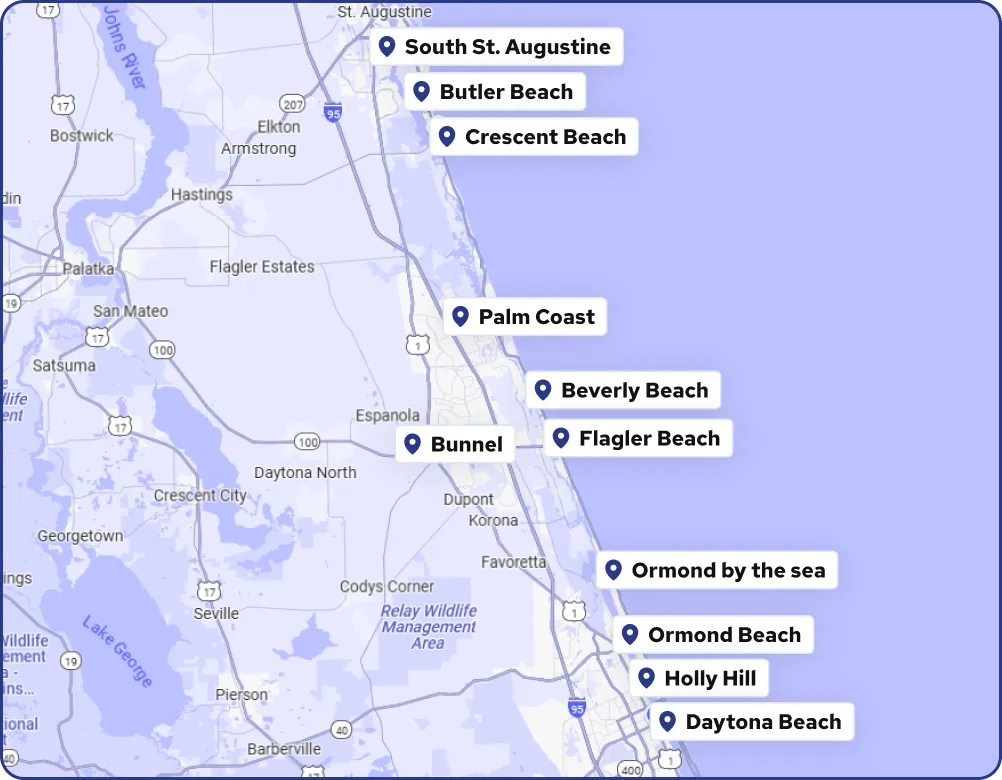
Residents in Flagler Beach frequently battle high humidity and airborne contaminants that bypass standard HVAC filters, turning the home environment into a source of discomfort. Accu-Temp Heating and Air Conditioning provides comprehensive strategies to identify, isolate, and eliminate indoor pollutants.
- Achieve cleaner, healthier indoor air through scientifically backed IAQ testing and remediation.
- Implement expert solutions ranging from whole-home dehumidification to hospital-grade air purification.
- Receive transparent estimates and clear explanations for all proposed air quality improvements.
Licensed professionals perform every assessment and installation, ensuring all equipment meets strict industry standards and local building codes for your peace of mind.

Comprehensive Indoor Air Quality Solutions
Indoor air quality services involve more than just changing a filter. They encompass a suite of integrated solutions designed to treat the air moving through your HVAC system. The goal is to address the three main categories of indoor pollutants: particulates (dust, pollen), biologicals (mold, bacteria, viruses), and chemical gases (VOCs, odors).
When you engage professional IAQ services, the scope of work is tailored to the specific contaminants found in your living space.
Air Filtration Systems
Standard 1-inch filters are designed primarily to protect the HVAC equipment, not the people breathing the air. Advanced media air cleaners and high-efficiency filtration systems capture microscopic particles that standard filters miss.
- Media Air Cleaners: These are thicker, deeply pleated filters installed directly into the return ductwork. They provide a larger surface area to trap smaller particulates like pet dander, mold spores, and fine dust without restricting airflow to the system.
- HEPA Filtration: High-Efficiency Particulate Air (HEPA) bypass systems can be installed for homeowners requiring the highest level of filtration, often used in medical environments to capture 99.97% of particles down to 0.3 microns.

Humidity Control Systems
In coastal environments like Flagler Beach, controlling moisture is as important as controlling temperature. High humidity promotes mold growth, dust mite proliferation, and structural damage.
- Whole-Home Dehumidifiers: Unlike portable units that treat a single room, these systems integrate with the central HVAC unit to regulate moisture levels across the entire square footage. They run independently of the cooling cycle, allowing for humidity control on mild days when the AC isn't running constantly.
- Moisture Benefits: Maintaining indoor relative humidity between 40% and 50% significantly reduces the survival rate of airborne viruses and prevents the damp conditions mold spores require to colonize.
UV Germicidal Lights
Filtration traps solids, but it does not kill living organisms. UV-C light technology addresses biological contaminants.
- Coil Sanitizing Lights: These are mounted near the indoor evaporator coil. Their primary function is to prevent mold and bacterial slime from growing on the damp coil surface, which keeps the system clean and prevents spores from blowing through the ducts.
- Air Sanitizing Lights: Installed in the supply ductwork, these powerful lights sterilize airborne bacteria and viruses as they pass through the HVAC system, neutralizing them before they recirculate into living spaces.
Energy Recovery Ventilators (ERVs)
Modern homes are built tight for energy efficiency, which traps stale air and pollutants inside.
- Fresh Air Exchange: ERVs exhaust stale, contaminated indoor air while drawing in fresh, filtered outdoor air.
- Energy Preservation: These systems transfer heat and moisture between the outgoing and incoming air streams, ensuring the fresh air does not drastically alter the indoor temperature or humidity levels, keeping energy bills stable.
The Assessment and Installation Process
Implementing the right air quality solution requires a methodical approach. Guesswork often leads to purchasing expensive equipment that does not solve the underlying problem — view our financing options for upgrades. A professional process ensures that the technology applied directly addresses the specific pollutants present in the home.
Step 1: In-Depth Air Quality Evaluation
The process begins with a thorough audit of the current environment.
- Technicians inspect the ductwork for leaks, dust buildup, or signs of moisture intrusion.
- Measurements are taken for relative humidity, temperature, and airflow static pressure.
- Advanced monitors may be used to detect levels of Volatile Organic Compounds (VOCs), carbon dioxide, and particulate matter concentration.
- The physical location of the HVAC unit and the layout of the home are analyzed to determine where air stagnation occurs.
Step 2: System Design and Recommendations
Based on the data collected, a specific plan is formulated.
- If humidity is the primary driver of mold and discomfort, a dedicated dehumidifier is specified.
- If allergies are the main concern, high-MERV filtration or HEPA bypass systems are prioritized.
- For odor control and biological sterilization, UV lights or oxidizing air purifiers are recommended.
- The proposal outlines exactly how these components will integrate with existing heating and cooling equipment.
Step 3: Integration and Installation
Certified installers proceed with fitting the new equipment.
- Modifications are made to the existing ductwork (the plenum) to accommodate media cabinets or dehumidifiers.
- Electrical connections are established, often requiring dedicated circuits for high-powered IAQ devices.
- Sensors and humidistats are installed in the living space or return ducts to automate the operation of the new equipment.
- Drain lines are run for dehumidifiers to ensure condensate is safely removed from the home.
Step 4: Verification and Calibration
Installation is followed by testing to ensure performance.
- Technicians verify that the introduction of new filters or equipment has not negatively impacted the static pressure or airflow of the HVAC system.
- Controls are calibrated to the homeowner’s preferences (e.g., setting the dehumidifier to maintain 45% humidity).
- The system is cycled through all modes of operation to verify seamless integration.
When to Upgrade Air Quality Systems vs. Basic Maintenance
Homeowners often wonder if their issues can be solved by simply cleaning the house more often or buying a store-bought portable purifier. While basic cleaning helps, it cannot address systemic airborne issues. Understanding when to invest in integrated solutions is critical for long-term health and home preservation.
Signs That Standard Maintenance Is Insufficient
Relying on portable units or standard filter changes is often a losing battle against the volume of air a central HVAC system moves.
- Persistent Mold Growth: If mold reappears in bathrooms, around vents, or on soft surfaces despite cleaning, the ambient humidity is likely too high for the AC to manage alone. This requires a whole-home dehumidifier.
- Lingering Odors: Cooking smells, pet odors, or musty scents that persist for hours indicate poor ventilation. Recirculating the same air simply spreads the odor. An air purification system or ventilator is necessary to neutralize the source.
- Health Symptoms: If family members experience relief when leaving the house but symptoms return upon entering, the home is likely suffering from "Sick Building Syndrome." This requires a comprehensive approach involving both filtration and UV sterilization.
- Visible Dust Accumulation: If dust settles on furniture hours after cleaning, it indicates that the current filtration system is allowing particulates to bypass the filter or that the ducts are leaking, pulling in dirty air from the attic or crawlspace.
The Limitations of Portable Units
Portable air purifiers are designed for single-room applications.
- Volume: They cannot process the air volume of an entire house.
- Noise: To be effective, they must run on high settings, which are often loud and intrusive.
- Integration: They do not treat the source of the air distribution—the ductwork. Integrated solutions treat 100% of the air flowing through the system, ensuring every room receives treated air.
Regional Considerations for Air Quality
Operating HVAC equipment in Florida requires specific attention to environmental factors that do not exist in drier, cooler climates. The specific geography of Flagler Beach introduces salt air, extreme humidity, and seasonal pollen spikes that dictate the type of IAQ equipment required.
Humidity and Load Calculation
The cooling season is long, but the "shoulder seasons" (spring and fall) pose a unique challenge. During these times, the temperature may not be hot enough to trigger the AC, but the humidity remains oppressive.
- Without the AC running, moisture builds up indoors.
- Supplemental dehumidification is essential to keep the home dry when the cooling load is low.
- Proper sizing is critical; equipment that is too small will run continuously without achieving the set point, driving up energy costs.
Salt Air and Corrosion
Proximity to the ocean accelerates corrosion on all outdoor equipment.
- Fresh air intakes and ventilators located on the exterior must be constructed of corrosion-resistant materials.
- Regular maintenance is required to ensure that salt deposits do not block intake screens or damage the heat exchange cores of ERV systems.
Pollen and Seasonal Allergens
The region experiences distinct pollination seasons that coat outdoor surfaces in yellow dust.
- Homes that rely on natural ventilation (open windows) during these periods introduce massive amounts of allergens into the home.
- Mechanical ventilation (ERVs) allows for fresh air intake while filtering out pollen before it enters the living space, a crucial feature for allergy sufferers in this area.
Why Professional IAQ Integration Matters
Store-bought solutions and DIY fixes often fail to address the complexity of airflow dynamics. Accu-Temp Heating and Air Conditioning utilizes a "whole-home" approach that views the house as a system rather than a collection of separate rooms.
Accurate Diagnosis vs. Sales Tactics
Professional service providers focus on data.
- Airflow measurements dictate whether a duct system can handle a high-restriction HEPA filter without freezing the AC coil.
- Humidity readings determine the exact pint-capacity needed for a dehumidifier.
- This technical precision prevents the installation of equipment that could damage the HVAC system or fail to solve the air quality problem.
Certified Installation and Safety
IAQ equipment often involves high voltage electricity and UV radiation.
- UV lights must be installed in locations that prevent the UV rays from degrading non-UV-resistant plastics or wiring within the air handler.
- Electrical connections for dehumidifiers and ventilators must meet local electrical codes.
- Improper installation can void HVAC manufacturer warranties. Professional installation ensures compliance with all warranty terms.
Long-Term Support and Maintenance
Air quality systems require maintenance to remain effective.
- UV bulbs have a lifespan and must be replaced to maintain germicidal lethality.
- Media filters have high capacities but eventually require replacement to prevent pressure drops.
- Professional service plans track these intervals, ensuring the investment continues to pay off in clean air year after year.
Improving indoor air quality is a decision that impacts daily health, sleep quality, and the longevity of the home’s interior. By moving beyond basic filters and addressing humidity, ventilation, and purification at the source, homeowners can create a sanctuary free from the pollutants that dominate the outdoor environment.
Take the next step toward a cleaner, safer home environment. Contact our team today to discuss your indoor air quality options.
Advanced Strategies to Improve Air Distribution and Purity
Your HVAC system circulates more than air—it also spreads particles that may reduce your health and comfort. Our tailored IAQ services and solutions in Flagler Beach, FL, offer filtration upgrades, UV sanitation, and humidity balancing to restore clean, breathable air throughout your space. At Accu-Temp Heating and Air Conditioning, we don’t guess—we measure and fix.
Request IAQ Service That Solves Airflow and Purity Issues at the Source
Contact Us
Why Choose One Company for Everything?

Simplicity

Expertise

Savings
Service Areas